Improve English Pronunciation
When you want to improve English pronunciation, the ability to speak English clearly so others understand you easily. Also known as English speaking clarity, it’s not about sounding like a native speaker — it’s about being understood without frustration. Many learners focus on vocabulary and grammar, but if your pronunciation is off, even perfect sentences can confuse listeners. The good news? You don’t need years of lessons or a perfect accent. Small, daily habits make a huge difference.
One key thing that holds people back is listening. You can’t copy what you don’t hear clearly. Tools like free English speaking courses, online programs that teach spoken English without cost — from YouTube channels to apps like Duolingo — give you real examples of how words are actually said. Pay attention to how native speakers stress syllables, link words, and drop sounds. For example, "I want to" becomes "I wanna" in casual speech. That’s not lazy — it’s natural. Learning these patterns is part of English fluency, the ability to speak smoothly and naturally, not just correctly.
Another big factor is mouth movement. Most people don’t realize English uses different muscle patterns than their native language. Try this: say "th" in "think" slowly. Feel your tongue between your teeth? That’s not how it’s done in Hindi, Tamil, or many other languages. Practice minimal pairs — words that differ by just one sound, like "ship" and "sheep" — to train your ears and mouth together. Record yourself. Compare. Do it again. It’s simple, but it works.
Consistency beats intensity. Ten minutes a day, focused on one sound or phrase, is better than an hour once a week. Use free resources like English speaking practice, activities and exercises designed to build spoken confidence from podcasts, news clips, or even TikTok videos. Shadowing — repeating what you hear right after the speaker — is one of the most powerful techniques used by language coaches.
And don’t wait until you’re "ready." The best way to improve is to speak, even if you make mistakes. Every conversation is practice. Every correction is progress. The posts below give you real, no-fluff ways to build this skill — from free tools you can start today, to routines that fit into a busy day, to how to fix the top 5 pronunciation mistakes Indian learners make. You don’t need a degree. You don’t need to pay. You just need to listen, repeat, and keep going.
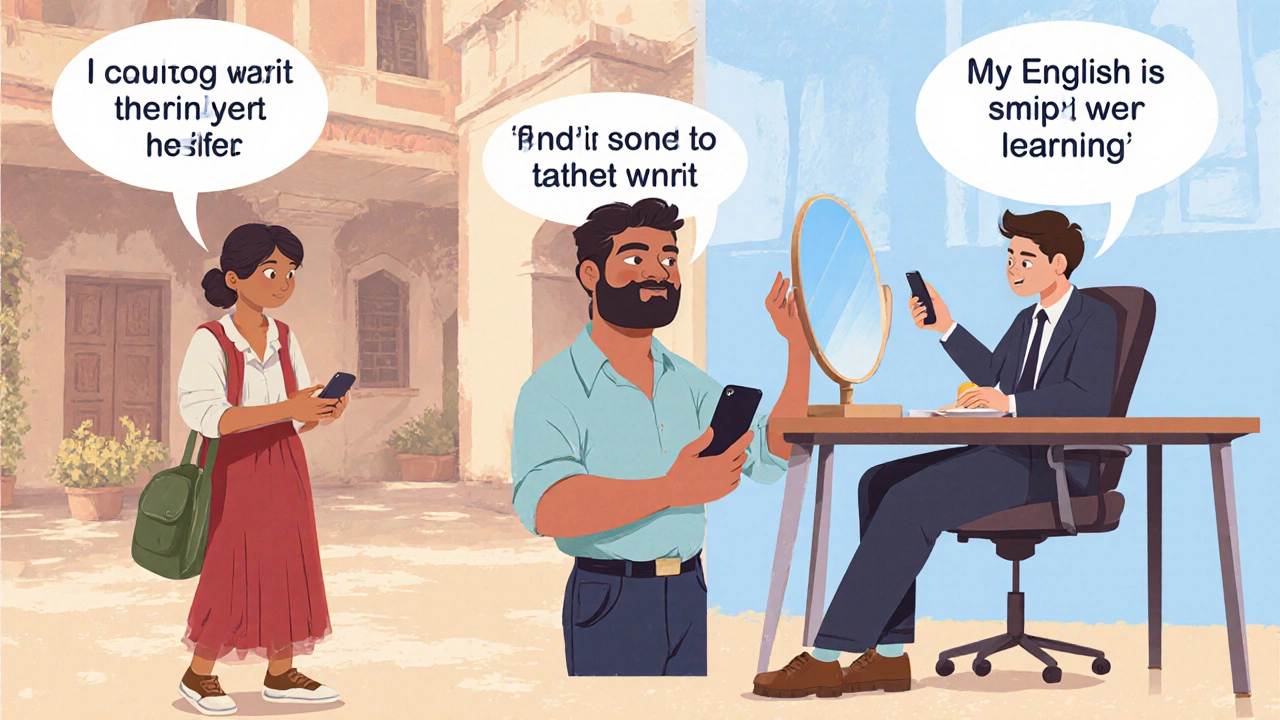
How to Speak English Confidently and Fluently
Learn how to speak English confidently and fluently with daily habits, real practice, and smart techniques - no perfection required. Start speaking today, not when you're ready.