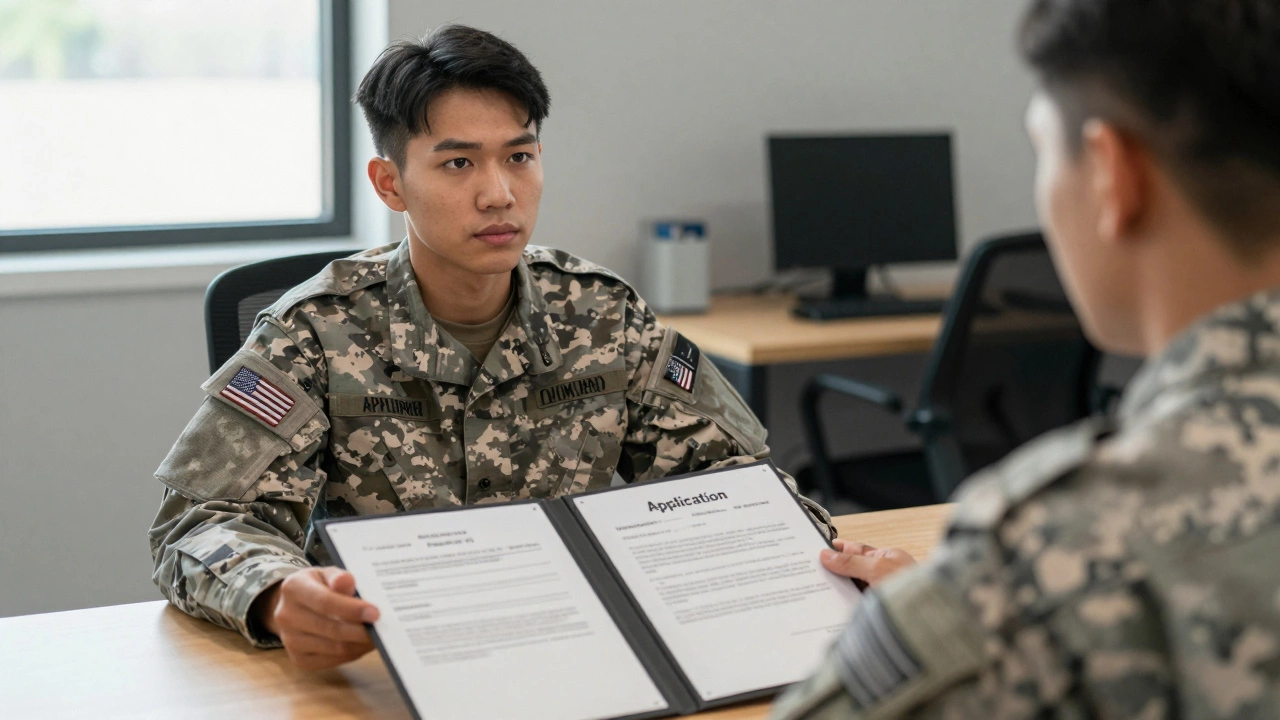
Think you're completely locked out of a military career because of a mistake from your past? You aren't. While a criminal record is a major red flag, it isn't always a dead end. The reality is that the U.S. military often looks at the person you are today rather than who you were ten years ago, provided you can prove you've turned things around. But let's be clear: it's not a guarantee. Getting in with a felony requires a specific process called a waiver, and whether you get it depends heavily on the type of crime and which branch you're eyeing.
Key Takeaways for Applicants
- Felonies are generally disqualifying, but felon military waiver applications can override this.
- The type of crime (violent vs. non-violent) heavily impacts your chances.
- The Army typically has the most flexible waiver policies compared to the Air Force or Navy.
- You must provide a detailed paper trail of rehabilitation to succeed.
- Some crimes, like treason or serious sexual offenses, are usually permanent bars.
The Moral Waiver Process
To get into the service with a record, you need a Moral Waiver. Essentially, this is a formal request asking the military to overlook a specific disqualifying factor. It is not a legal pardon; it's an administrative exception. When you sit down with a recruiter, you can't hide your history. They will run a background check through the FBI, and everything will come up. The best move is to be honest from the first second.
The waiver process starts with documentation. You'll need to gather court records, police reports, and letters of recommendation. The military wants to see that the crime was an isolated incident and that you've spent the intervening years being a productive member of society. If you were convicted of a drug charge at 18 but have held a steady job and volunteered in your community for five years, you're in a much stronger position than someone with a recent string of arrests.
Branch-Specific Flexibility
Not all branches of the United States Armed Forces play by the same rules. If you're struggling to get an answer from one recruiter, it might be because that specific branch has a stricter quota or policy for waivers.
| Branch | Waiver Accessibility | General Approach |
|---|---|---|
| Army | High | Most lenient; frequently grants waivers for non-violent felonies. |
| Navy | Moderate | Case-by-case basis; focuses heavily on the nature of the crime. |
| Air Force | Low | Strictest standards; waivers are harder to obtain. |
| Marine Corps | Moderate | Rigid standards but will consider strong candidates with a clear path of reform. |
The US Army is generally the most accessible route for those with a record. Because they have the largest manpower requirement, they are more likely to gamble on a candidate who has shown genuine growth. The Air Force, conversely, often has a surplus of highly qualified applicants, meaning they can afford to be extremely selective about who they let in.
Crimes That Are Likely Deal-Breakers
While many things are waivable, some are not. There are certain "red line" offenses that almost always result in a permanent rejection. If your record includes treason, espionage, or high-level felonies involving the exploitation of children, the chances of a waiver are nearly zero. These crimes violate the core values of military discipline and trust.
Violent crimes, such as aggravated assault or armed robbery, fall into a gray area. They are waivable, but the scrutiny is ten times higher. The reviewing officer will look for patterns. Did you have a violent outburst once during a period of instability, or is there a history of aggression? A single fight in high school is a different story than a pattern of domestic violence. The military is essentially conducting a risk assessment: will this person be a liability or a danger to their fellow soldiers in a high-stress environment with weapons?

Building Your Case for Admission
If you want a waiver, you have to sell your transformation. You are no longer just an applicant; you are a case study in rehabilitation. Start by gathering every piece of evidence that proves you've changed. Employment records are huge. If you've worked the same job for three years, it shows stability. Educational achievements, like earning a GED or a college degree after your conviction, prove a commitment to self-improvement.
Personal character references are equally vital. You don't want generic letters that say "he's a nice guy." You want letters from former employers, teachers, or community leaders who can specifically state, "I knew this person during their lowest point, and I have seen them evolve into a responsible adult." These letters provide the emotional evidence that a court transcript cannot.
The Impact of Security Clearances
Joining the military is one thing; getting a specific job is another. Many military roles require a Security Clearance. This is where a felony can really hurt you. Even if you get a moral waiver to enlist, you might be barred from roles in intelligence, cybersecurity, or special operations because you cannot pass the background check for a Secret or Top Secret clearance.
This means you might be limited in your choice of Military Occupational Specialties (MOS). You might not be able to work in high-level communications or counter-intelligence, but you can still serve in combat arms, logistics, or medical roles. It's a trade-off. You get the opportunity to serve and the benefits that come with it, but you might have to accept a role that doesn't require a high-level clearance.
Common Pitfalls and How to Avoid Them
The biggest mistake applicants make is lying by omission. They think that if they don't mention a five-year-old misdemeanor, it won't matter. In the age of digital records, this is a disaster. If a recruiter finds out you lied on your enlistment paperwork, it's not just a "no"-it's a permanent ban for fraudulent enlistment. Honesty is the only currency that works in this process.
Another common error is rushing the process. Waivers take time. Some can take weeks; others can take months. If you're in a rush to join and pressure your recruiter to "just make it happen," you might miss critical documentation that could have made the difference. Be patient, stay organized, and treat your waiver application like a full-time job.
Steps to Take Right Now
- Request your official records: Get certified copies of your sentencing and completion of probation documents.
- Update your resume: Highlight every bit of steady work and community service you've done since your conviction.
- Contact multiple recruiters: Don't just talk to one person. Different recruiters have different levels of experience with waivers.
- Prepare a personal statement: Write a concise explanation of what happened, what you learned, and why you want to serve.
Does a drug felony stop me from joining?
Not necessarily. Drug-related offenses are some of the most common reasons for waiver requests. While a current drug habit is a disqualifier, a past conviction for possession or distribution can often be waived if you have been clean for a significant period and can prove it through testing or a stable lifestyle.
Can I join if I'm still on probation?
Generally, no. The military usually requires you to have completed all terms of your sentence, including probation and parole, before you can be sworn in. In some rare cases, you can apply for a waiver while on probation, but you likely won't be allowed to ship to basic training until you are officially released from legal supervision.
Do I need a lawyer for a military waiver?
No, you don't need a lawyer to apply for a moral waiver. The process is handled between you and your recruiter, who then submits the packet to the branch's waiver authority. However, having your legal records organized by a professional can help ensure you're submitting the correct paperwork.
Will a waiver affect my rank or promotions?
A moral waiver to join does not automatically stop you from getting promoted. Once you are in, your performance, leadership, and conduct are what matter. However, if your felony prevents you from obtaining a required security clearance, it may cap how high you can rise in certain specialized career fields.
What is the success rate of felony waivers?
There is no public "percentage" because it depends entirely on the crime and the branch's current needs. However, thousands of people with prior records serve in the military every year. Your best chance is to focus on the Army and present a flawless record of rehabilitation.