
Online Degree Employer Perception Calculator
Your Profile
Employer Perception Score
Enter Details
Click analyze to see how hiring managers view your profile.
The Stigma Is Fading Fast
For years, the question of whether online degrees are respected by employers hung over anyone considering remote education. If you applied for a job with a digital diploma back in 2019, you might have faced raised eyebrows or outright rejection. Today, that dynamic has shifted dramatically. With the global workforce adapting to hybrid models and remote work becoming standard practice, the stigma attached to virtual classrooms is evaporating faster than most predicted.
You probably worry that your resume will get tossed into the "maybe" pile because you didn't sit in a physical lecture hall. But here is the reality check: most hiring managers today care less about where you learned the material and more about what you can do with it. The shift wasn't gradual; it was forced by necessity during the pandemic and cemented by the tech boom of the early 2020s. By 2026, an online degree from a reputable institution is often viewed as a sign of self-discipline and adaptability-traits highly prized in modern workplaces.
Why the Perception Changed
To understand why employers are warming up to remote learning, you have to look at the data. A survey by the National Association of Colleges and Employers (NACE) showed that by 2024, nearly 85% of recruiters stated they would not discriminate against candidates solely based on their mode of study. This number continues to climb. Why? Because the quality of online education has improved significantly.
In the past, "online degree" often meant cheap, low-effort programs with little rigor. That era is largely gone. Today, top-tier universities offer fully accredited online programs that use the exact same curriculum, faculty, and assessment methods as their on-campus counterparts. When Harvard Business School launched its online MBA modules, or when Georgia Tech introduced its affordable Master of Science in Computer Science, they signaled a major change. These aren't lesser versions of traditional degrees; they are parallel tracks designed for working professionals.
Employers also recognize the practical benefits. An employee who completes a degree while maintaining a full-time job demonstrates time management skills that many fresh graduates simply haven't developed yet. You’re not just learning theory; you’re applying it in real-time. This blend of academic knowledge and professional experience makes online graduates particularly attractive to mid-level hiring managers looking for immediate impact.
The Critical Role of Accreditation
Not all online degrees are created equal, and this is where many people stumble. The biggest red flag for any employer isn't the fact that you studied online-it's whether your program is properly accredited. Accreditation is the seal of approval that ensures your education meets specific quality standards. In the United States, you want to look for regional accreditation bodies like the Higher Learning Commission (HLC). In India, bodies like the University Grants Commission (UGC) and Distance Education Bureau (DEB) play similar roles.
If a school claims to be accredited but only holds "national" or proprietary accreditation that isn't widely recognized, proceed with caution. Employers know which accreditations carry weight. For example, a business degree from an online program accredited by the Association to Advance Collegiate Schools of Business (AACSB) carries significantly more prestige than one without that designation. Always verify the status of your chosen program before enrolling. It’s the single most important factor in ensuring your degree is taken seriously.
- Regional/National Recognition: Check if the accrediting body is recognized by the government or major educational councils.
- Program-Specific Accreditations: Look for specialized seals (e.g., ABET for engineering, AACSB for business).
- Transparency: Legitimate schools clearly display their accreditation status on their website. If you have to dig hard to find it, that’s a warning sign.
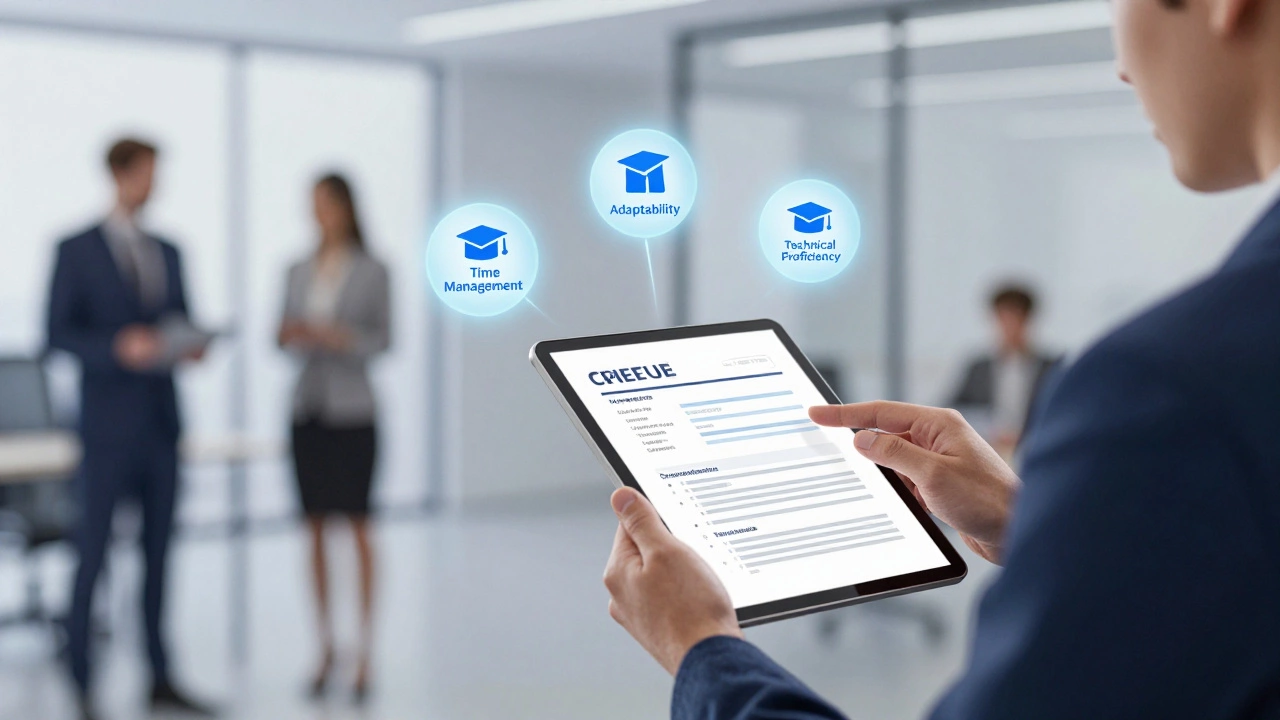
How Hiring Managers Evaluate Your Resume
When a recruiter scans your resume, they don’t see "online student." They see skills, projects, and outcomes. Modern Applicant Tracking Systems (ATS) filter for keywords related to competencies, not delivery methods. However, human reviewers still play a crucial role. Here is how they typically evaluate candidates with online credentials:
First, they look at the institution’s reputation. A degree from University of London or Indiana University via an online platform holds the same brand equity as their physical campuses. Second, they assess relevant experience. If you paired your online studies with internships, freelance work, or certifications, the mode of your degree becomes irrelevant. Third, they gauge cultural fit. Online learners often come across as independent and tech-savvy, which aligns well with distributed teams.
It helps to frame your education correctly on your resume. Don’t hide it, but don’t make it the sole focus either. List the degree normally, perhaps adding "(Online)" if required by local norms, but emphasize your capstone project, thesis, or key coursework that relates directly to the job description. Show them what you built, coded, analyzed, or managed during your studies.
| Factor | Online Degree | Traditional On-Campus Degree |
|---|---|---|
| Perceived Rigor | High (if accredited) | High |
| Networking Opportunities | Growing (virtual cohorts, alumni portals) | Strong (face-to-face interactions) |
| Flexibility & Work Balance | Excellent | Limited |
| Cost Efficiency | Generally Lower | Higher (tuition + housing + commuting) |
| Employer Bias | Mildly Positive (shows initiative) | Neutral/Positive |
Sectors Where Online Degrees Shine
Some industries have embraced online education faster than others. Technology, for instance, has always been meritocratic. If you can code, build apps, or manage cloud infrastructure, nobody cares if you learned Python through a university course or a bootcamp. Fields like Data Science, Digital Marketing, and Software Engineering heavily favor skills over pedigree.
Business and administration are also very open to online credentials. Executive MBAs and online master’s in management are common among professionals seeking promotion. HR departments understand that these individuals are often already employed and bring mature perspectives to the table. Even healthcare is shifting, with many nursing and public health degrees offered online due to high demand and flexible scheduling needs.
However, certain fields remain conservative. Law, medicine, and some areas of academia may still prefer traditional pathways, though this is slowly changing. If you’re aiming for a clinical license or a bar exam, ensure your online program offers the necessary practical components and is approved by the relevant licensing boards.
Building Credibility Beyond the Diploma
If you’re worried about potential bias, the best defense is a strong offense. Build a portfolio that speaks louder than your transcript. For designers, that means a Behance profile. For developers, a GitHub repository with active contributions. For marketers, case studies showing ROI growth. These tangible proofs of competence neutralize any lingering doubts about your degree format.
Networking is another powerful tool. While online programs lack spontaneous hallway chats, they offer robust alumni networks and LinkedIn groups. Engage with peers, attend virtual conferences, and connect with industry leaders. Many jobs are filled through referrals, and a strong professional network can bypass rigid screening criteria entirely. When a colleague recommends you, your degree type rarely comes up as a concern.
Additionally, consider stacking credentials. Combine your online degree with industry-recognized certifications like PMP for project management, AWS Certified Solutions Architect for cloud computing, or Google Analytics for marketing. This combination shows depth and breadth, proving you’re committed to continuous learning regardless of the format.
What Recruiters Actually Say
I’ve spoken with several hiring managers in Bangalore and Silicon Valley recently, and the consensus is clear. One tech lead at a mid-sized SaaS company told me, "I look at the GitHub activity and the technical interview performance. The university name matters less unless it’s completely unknown. If it’s a recognized brand, online or offline doesn’t matter." Another HR director shared, "We actually appreciate online graduates because they’ve shown they can balance work and study. That resilience translates well to our fast-paced environment." These anecdotes reflect a broader trend. The gatekeeping that once protected traditional institutions is weakening. Competence, adaptability, and results are the new currency. As long as your online degree is from a credible source and you can demonstrate your skills, you won’t be penalized for choosing the digital route.
Will an online degree affect my chances of getting a visa?
Generally, no. Most countries, including the US, UK, and Canada, evaluate visas based on the accreditation and recognition of the institution, not the mode of delivery. Ensure your university is listed in official international education databases to avoid issues.
Are online degrees cheaper than traditional ones?
Often, yes. You save on campus fees, housing, commuting, and materials. Some programs also offer lower tuition rates specifically for online students. However, premium executive programs may charge similar prices to on-campus equivalents.
How do I prove my online degree is legitimate?
Verify the school’s accreditation status on official government or regulatory websites. Include the accrediting body’s name on your resume if space permits. Additionally, provide transcripts upon request, which should clearly state the institution and program details.
Can I get a job abroad with an Indian online degree?
Yes, provided the university is UGC-recognized and ideally has international affiliations. Global employers value skills and experience. Highlighting your proficiency in English and cross-cultural communication can further strengthen your application.
Is an online MBA worth it compared to a regular MBA?
If you are already working, an online MBA is often more valuable because you can apply lessons immediately and maintain your income stream. Top-tier online MBAs from accredited schools are increasingly accepted by Fortune 500 companies for leadership roles.