NEET Physics Strategy Checker
Answer these questions to get a personalized recommendation on how to use DC Pandey in your NEET preparation.
Verdict
You've probably heard the name DC Pandey whispered in every coaching center and online forum. It's the book that half your batchmates are solving while you're still trying to wrap your head around Newton's laws. But here's the million-dollar question: does it actually get you a rank under 1000, or is it just another heavy tome gathering dust on your shelf?
The short answer? No, not entirely. But it's closer than you think. Let's break down exactly what this book does well, where it fails you, and how to use it so it doesn't become your nemesis.
What Exactly Is DC Pandey?
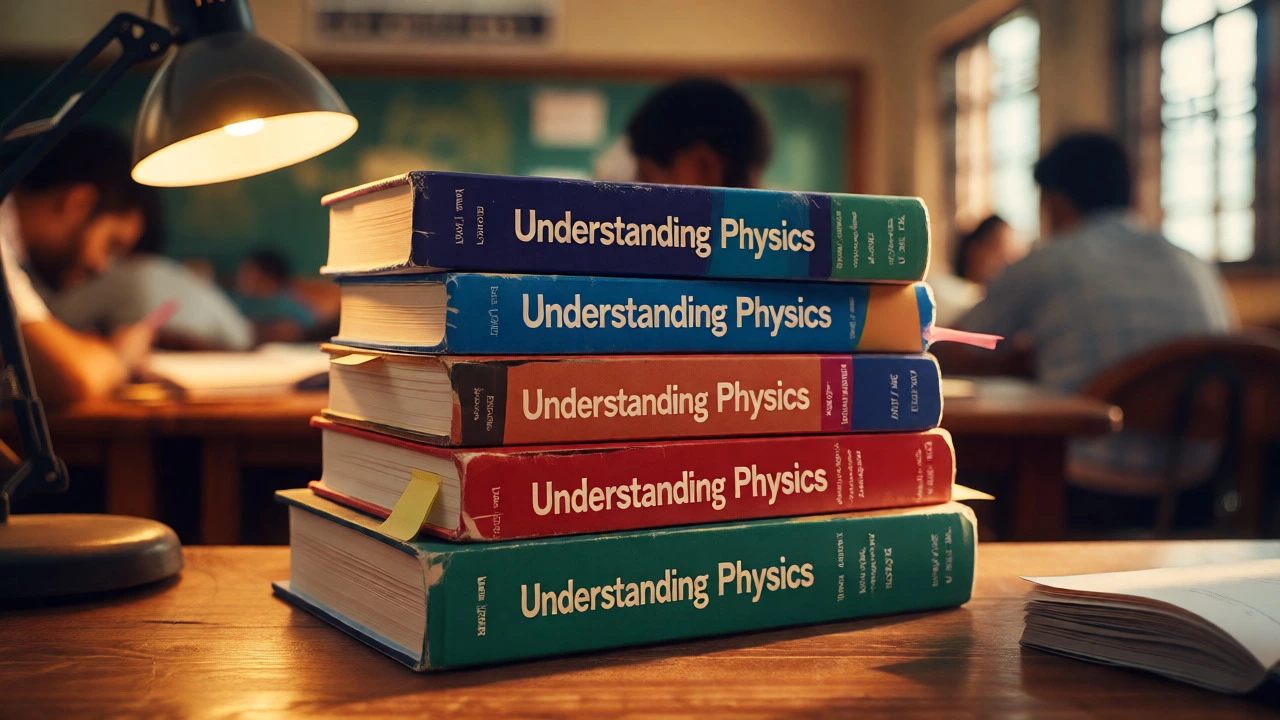
Understanding Physics by D.C. Pandey is a series of five volumes designed primarily for JEE Main and Advanced aspirants, covering Mechanics, Electricity and Magnetism, Optics, Modern Physics, and Thermodynamics. Published by Arihant Publications, it has become synonymous with rigorous problem-solving practice for Indian engineering entrance exams.
Here's the catch most students miss: it wasn't originally built for NEET. It was built for engineers who need to derive formulas from scratch and solve complex, multi-step problems. NEET, on the other hand, tests your speed, conceptual clarity, and ability to apply standard formulas directly. The gap between these two demands is where most students stumble.
The Good Parts: Why Students Love It
If you're aiming for a top rank in NEET, you need more than just rote memorization. You need to understand *why* things happen. That's where DC Pandey shines.
- Conceptual Depth: The theory sections explain derivations clearly. If you're confused about why current lags voltage in an inductor, this book breaks it down without skipping steps.
- Problem Variety: The exercises range from basic application questions to tricky, concept-based ones. This trains your brain to spot patterns quickly.
- Structured Approach: Each chapter starts with theory, moves to solved examples, then splits exercises into Level 1 (JEE Main/NEET level) and Level 2 (Advanced). This structure helps you gauge your progress honestly.
I've seen students who struggled with rotational motion suddenly click after working through DC Pandey's mechanics section. The step-by-step solutions force you to confront your gaps rather than glossing over them.
The Bad Parts: Where It Fails NEET Aspirants
But let's be real. Using DC Pandey as your *only* source is like training for a marathon by only doing sprints. Here's why:
- Time Consumption: Solving every single problem takes months. NEET gives you 3 hours and 20 minutes for 45 Physics questions. Speed matters more than depth in the exam hall. Spending three days on one chapter of Mechanics leaves no time for Organic Chemistry or Biology revision.
- Overkill Difficulty: Many Level 2 problems are straight-up JEE Advanced material. You don't need to calculate the moment of inertia of a non-uniform rod rotating about a skewed axis for NEET. You need to know the formula for a uniform rod and apply it fast.
- Lack of NCERT Focus: NEET asks direct questions from NCERT lines. DC Pandey often ignores these small, factual details because they're too simple for engineering aspirants. You might master complex circuits but forget the exact definition of drift velocity as stated in NCERT.

How to Use DC Pandey Correctly for NEET
Don't throw the book away. Don't buy ten other books either. Use it strategically. Think of DC Pandey as your gym weight-useful for building strength, but you also need cardio (speed) and flexibility (NCERT familiarity).
Step 1: Master NCERT First
Before opening DC Pandey, read the NCERT chapter thoroughly. Highlight every line. Understand every diagram. Solve the in-text questions and back-exercises. This builds your foundation. Without this, DC Pandey feels like climbing Everest without oxygen.
Step 2: Read Theory Selectively
Skip the lengthy derivations if they aren't in NCERT. Focus on the "Key Concepts" and "Points to Remember" sections. These summaries are gold mines for quick revision. If a derivation isn't in NCERT, skim it for understanding but don't memorize it.
Step 3: Solve Only Level 1 Exercises
This is crucial. Ignore Level 2 completely unless you're consistently scoring 80+ in Physics mocks. Level 1 contains questions that mirror NEET's difficulty. Aim to solve 70-80% of these correctly. If you're stuck on a problem for more than 5 minutes, look at the solution. Move on. You're preparing for NEET, not writing a research paper.
Step 4: Supplement with PYQs
Previous Year Questions (PYQs) are non-negotiable. After finishing a chapter in DC Pandey, solve all NEET PYQs from the last 10 years. This aligns your thinking with the actual exam pattern. Often, you'll realize that the complex concepts in DC Pandey rarely appear in their full glory on the NEET paper.
Comparison: DC Pandey vs. Other Popular Books
Let's see how it stacks up against alternatives. This table helps you decide based on your current level.
| Feature | DC Pandey (Arihant) | HC Verma (Concepts of Physics) | MTG NCERT at Your Fingertips |
|---|---|---|---|
| Primary Audience | JEE Main/Advanced + Top NEET Rankers | JEE Main/Advanced + Concept Builders | NEET Beginners + Revision |
| Difficulty Level | Moderate to High | High (Conceptual) | Easy to Moderate |
| NCERT Alignment | Low (Focuses on application) | Medium (Strong basics) | Very High (Line-by-line) |
| Time Required per Chapter | 3-5 Days | 4-6 Days | 1-2 Days |
| Best For | Strengthening problem-solving skills | Building deep conceptual clarity | Quick revision and factual recall |
Who Should Actually Buy It?
Not everyone needs DC Pandey. Be honest with yourself.
- Buy it if: You're already comfortable with NCERT, you're scoring 60-70% in Physics mocks, and you want to push for 90%+. You have extra time (at least 2 hours daily for Physics) and enjoy challenging problems.
- Skip it if: You're struggling to finish syllabus, you find Physics intimidating, or you're scoring below 50%. In this case, stick to NCERT, MTG Fingertips, and PYQs. Adding DC Pandey now will only cause burnout.
The Hidden Trap: False Confidence
Here's a scenario I've seen countless times. A student solves 200 hard problems from DC Pandey. They feel unstoppable. Then they take a NEET mock test. They panic because a question asks for the SI unit of magnetic flux, which they never bothered to memorize because it was "too easy." Or they spend 5 minutes deriving a formula instead of applying it instantly.
DC Pandey builds muscle memory for complex logic. NEET tests reflexes for standard facts. Don't confuse the two. Balance is key.
Final Verdict: Is It Enough?
No. DC Pandey alone is not enough for NEET. It lacks the specific NCERT focus and speed-training aspect required for medical entrance exams. However, it is an excellent *supplement* for serious aspirants who want to dominate Physics.
Think of it this way: NCERT is your textbook. PYQs are your map. DC Pandey is your advanced training kit. You can win the race without the training kit, but you'll run faster and smarter with it-if you use it wisely.
If you're short on time, skip it. If you're hungry for a top 1000 rank and have the stamina, crack open those pages. Just remember: mark the questions you got wrong, revisit them weekly, and never let perfectionism kill your progress.
Is DC Pandey better than HC Verma for NEET?
For pure NEET preparation, HC Verma is often preferred for its conceptual clarity and concise explanations. DC Pandey offers more practice problems but can be overly detailed for NEET. If you choose one, pick HC Verma for concepts and MTG Fingertips for practice. Use DC Pandey only if you want extra challenge.
Which chapters of DC Pandey are most important for NEET?
Mechanics (especially Laws of Motion, Work Energy Power, and Rotational Motion) and Electrodynamics (Current Electricity, Magnetism, EMI) are high-weightage areas. However, always prioritize chapters where you feel weak. Do not ignore Optics and Modern Physics just because they seem easier; NEET loves direct questions from these sections.
Can I clear NEET without solving DC Pandey?
Absolutely. Thousands of students clear NEET with high ranks using only NCERT, Previous Year Questions, and a simpler reference book like MTG NCERT at Your Fingertips. DC Pandey is optional, not mandatory. Consistency with NCERT beats sporadic attempts at advanced books.
How much time should I dedicate to DC Pandey daily?
If you're using it alongside school/coaching, limit it to 1-1.5 hours daily. Focus on quality over quantity. Solving 20 Level 1 problems with full understanding is better than rushing through 50. Adjust based on your remaining syllabus and mock test performance.
Are the solutions in DC Pandey reliable?
Generally, yes. Arihant publications maintain good editorial standards. However, minor errors do occur. If a solution seems wrong, cross-check with another source or ask a teacher. Don't blindly trust any book; critical thinking is part of preparation.