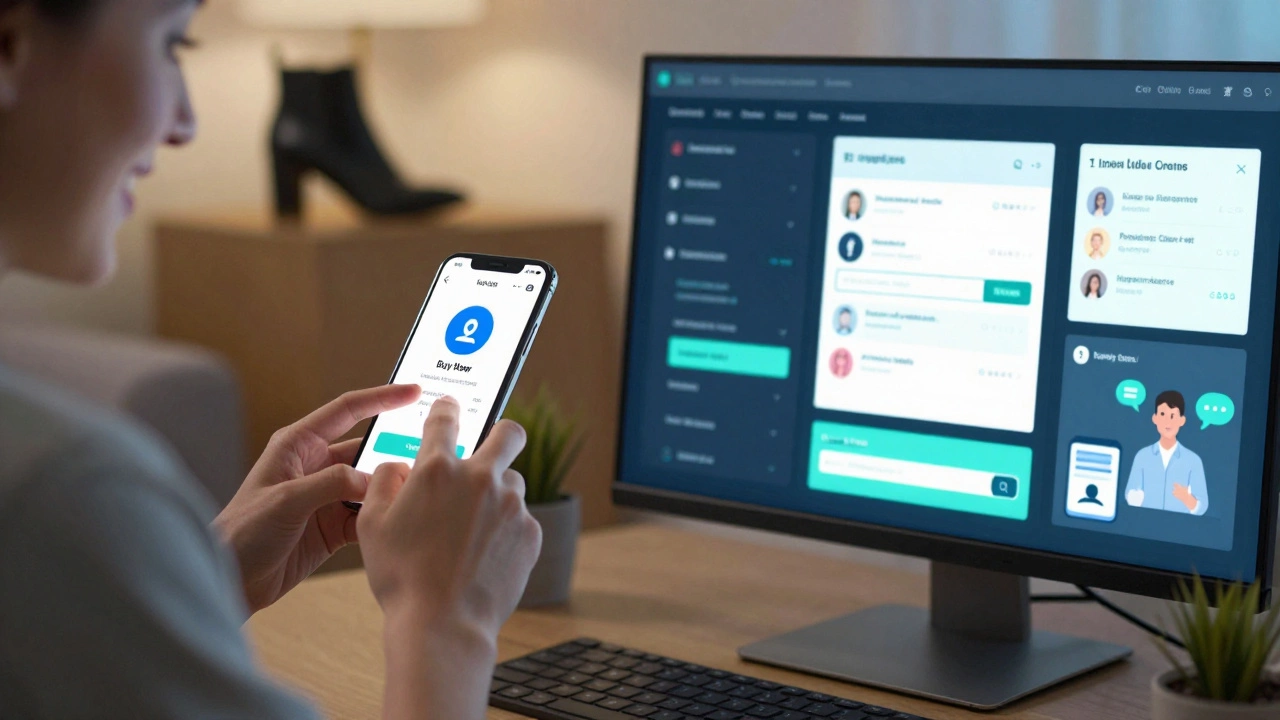
E-commerce vs Online Shopping Quiz
Test Your Knowledge
How well do you understand the difference between e-commerce and online shopping? Answer these 5 questions to find out!
1. What is online shopping?
2. Which of these is an example of e-commerce?
3. What makes an online store truly e-commerce?
4. What is the key difference between online shopping and e-commerce?
5. If you're selling handmade candles on Instagram, which role are you playing?
People use the words e-commerce and online shopping like they mean the same thing. But they don’t. If you think buying a pair of shoes from Amazon is the same as running an e-commerce business, you’re missing the whole picture. One is a single transaction. The other is a whole system that powers thousands of those transactions every day.
Online shopping is what you do
Online shopping is the act of browsing, selecting, and buying something over the internet. You open your phone, find a product, click ‘Add to Cart’, enter your address, pay with UPI or a card, and wait for delivery. That’s it. You’re the customer. You don’t care how the website works, who built it, or how the inventory is managed. You just want your order to arrive on time.
Think of it like going to a physical store. You walk in, pick up a shirt, pay at the counter, and leave. The store owner might have a warehouse, suppliers, accounting software, and a delivery team - but you don’t need to know any of that. Online shopping is the same. It’s the final step in the process. The consumer-facing part.
E-commerce is what the business does
E-commerce is the entire ecosystem behind the scenes. It includes the website, the payment gateway, the inventory system, the shipping logistics, the customer database, the return policy, the marketing campaigns, and even the chatbot that answers questions at 2 a.m. E-commerce isn’t just the store - it’s the factory, the warehouse, the delivery truck, the billing department, and the customer service team - all connected by software.
For example, when you buy a handloom sari from a small seller on Etsy, you’re doing online shopping. But that seller? They’re running an e-commerce business. They use Shopify to manage their store, integrate with PayPal for payments, sync stock with a Google Sheet, and ship via Delhivery. Every one of those tools is part of their e-commerce setup.
One is a task. The other is a business model.
Online shopping is a behavior. E-commerce is a structure. You can go online shopping without ever setting up a website. But you can’t run an e-commerce business without letting customers shop online.
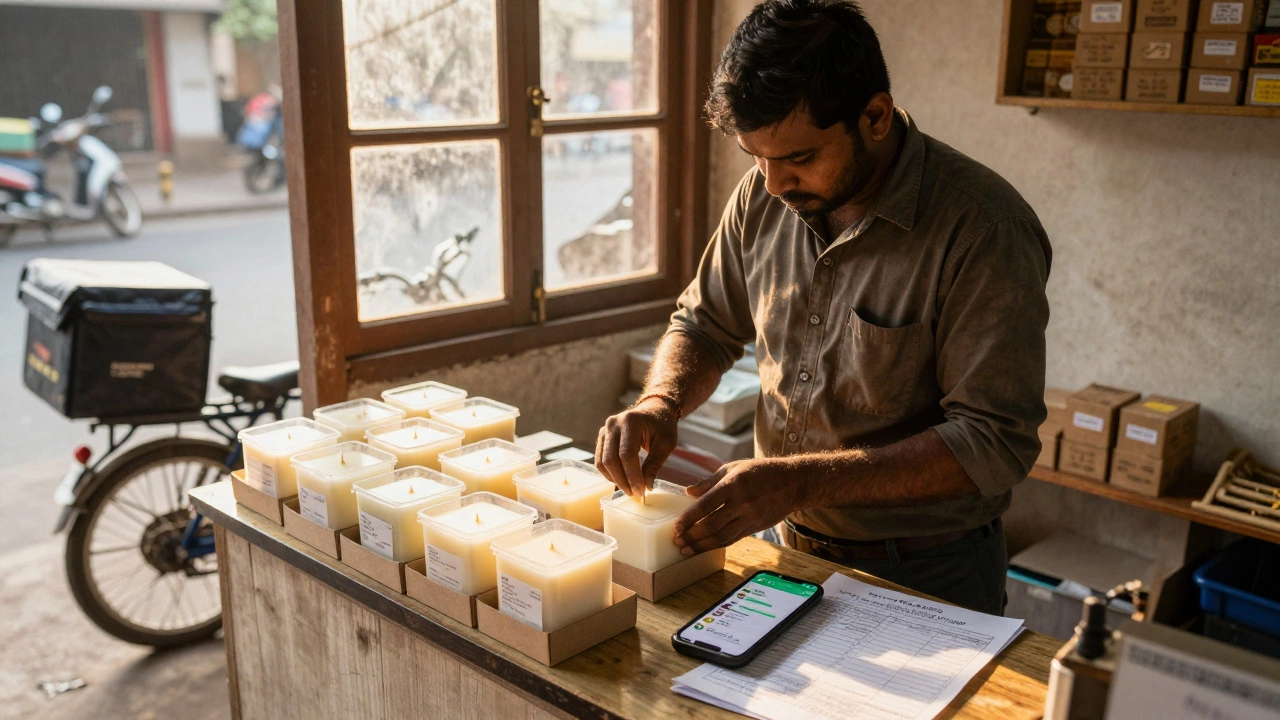
Here’s another way to see it: If you sell handmade candles on Instagram, you’re doing e-commerce. If you buy those candles from someone else’s Instagram page, you’re doing online shopping. Same platform. Same product. Two completely different roles.
Many small businesses in India think setting up a WhatsApp catalog is enough for e-commerce. But that’s just a catalog. True e-commerce needs a way to accept payments, track orders, send receipts, and handle returns - even if it’s done through WhatsApp or Telegram. Without those systems, it’s just a conversation, not a business.
Why the confusion matters
If you’re starting a business and think e-commerce just means putting products on Instagram, you’ll run into problems fast. You might not realize you need a way to process payments securely. Or that you need to track inventory across multiple platforms. Or that returns can cost more than the product itself if you don’t plan for them.
On the flip side, if you’re a shopper and think e-commerce is just about discounts and fast delivery, you might not understand why some websites feel clunky or why prices change so often. E-commerce platforms use algorithms to adjust prices based on demand, location, and even how many times you’ve visited. That’s not magic - it’s software.
Real-world examples from India
Flipkart and Amazon India are full-scale e-commerce platforms. They handle millions of products, thousands of sellers, complex logistics networks, and automated customer service. When you buy a phone from them, you’re doing online shopping - but they’re running e-commerce.
Now look at a local bakery in Bangalore. They post their daily menu on Instagram. Customers DM to order. The baker takes payments via PhonePe. They pack the order and deliver it themselves by bike. Is that e-commerce? Yes. It’s small. It’s manual. But it has the core elements: product display, payment collection, order tracking, and delivery. That’s e-commerce in its simplest form.
Compare that to a college student selling second-hand textbooks on a Facebook group. They take cash on delivery. No digital payment. No inventory system. No order tracking. That’s not e-commerce. That’s just a classified ad. Online shopping? Maybe. But not e-commerce.

What you need to build real e-commerce
If you want to move from casual selling to real e-commerce, you need four things:
- A way for customers to browse and select products (a website, app, or even a well-organized WhatsApp catalog)
- A secure way to accept payments (UPI, cards, wallets - not just cash)
- A system to track orders and inventory (even a simple spreadsheet works at first)
- A method to handle returns and customer questions (email, WhatsApp, or a basic help page)
You don’t need fancy software to start. But you do need to think like a business, not just a seller.
The bottom line
Online shopping is what you do as a buyer. E-commerce is what someone else does to make that shopping possible. One is an action. The other is an infrastructure.
Confusing the two can cost you money - whether you’re buying or selling. As a shopper, you might blame a website for being slow, not realizing the seller is using a free tool that can’t handle traffic. As a seller, you might think you’re in business because you have a catalog - but without payment and tracking, you’re just collecting requests.
Next time you buy something online, ask yourself: Who’s behind this? What systems are they using? That’s e-commerce. And now you know the difference.
