
NEET Opposition & State Strategy Checker
Select a state from the list to view its stance on NEET and receive strategic advice.
The Battle for Medical Seats: Why Some States Reject NEET
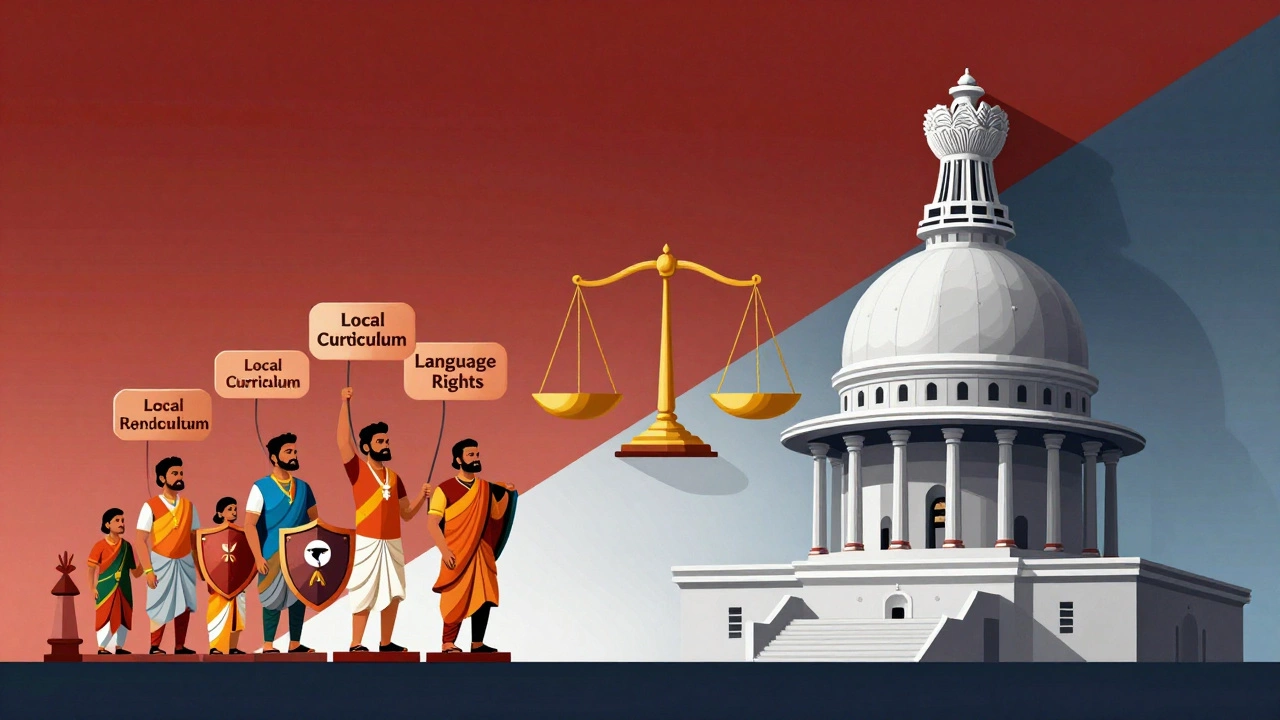
If you are a student aiming for a medical career in India, the path seems straightforward: crack NEET is the National Eligibility cum Entrance Test, the single gateway for admission to undergraduate and postgraduate medical courses across India. But beneath this uniform surface lies a deep political and educational rift. While the central government pushes for a standardized test to ensure meritocracy, several state governments actively oppose or attempt to bypass NEET. This isn't just bureaucratic friction; it is a high-stakes battle over who gets access to limited medical seats.
The core of the conflict lies in the tension between national uniformity and state autonomy. For years, the landscape was fragmented with dozens of different entrance exams. The introduction of NEET was meant to simplify this chaos. However, many states argue that a single exam fails to account for regional disparities, linguistic diversity, and the specific needs of their local healthcare systems. As we move through 2026, the debate remains heated, with some states continuing to challenge the mandate legally and administratively.
Why Do States Oppose NEET?
To understand which states oppose NEET, you first need to understand why they do. It is rarely about protecting low-quality education. Instead, the opposition stems from three main pillars: equity, language, and administrative control.
- Linguistic Barriers: NEET is conducted primarily in English and Hindi. Students from states where these languages are not the medium of instruction often feel at a disadvantage. States like Tamil Nadu and Kerala have historically argued that forcing students to compete in a language they are not fluent in violates their right to fair opportunity.
- Regional Disparity: Rural students often lack access to the same coaching infrastructure as their urban counterparts. State-specific exams were seen as a way to level the playing field by testing curriculum knowledge rather than coaching-based aptitude. When NEET became mandatory, many felt the rural candidate was further marginalized.
- State Autonomy: Under the Indian Constitution, education is a concurrent subject, but states have significant power over professional colleges within their borders. Many state governments believe they should have the final say on admission criteria to prioritize local candidates for local health needs.
The Major States Challenging NEET
While no state can completely ignore the Supreme Court’s mandate without legal peril, several have been vocal critics and have attempted to introduce parallel mechanisms or seek exemptions. Here are the key players in this ongoing dispute.
Tamil Nadu
Tamil Nadu has been the most consistent and vocal opponent of NEET since its inception. The state government has repeatedly passed resolutions opposing the exam, arguing that it discriminates against students who study in Tamil-medium schools. They contend that the syllabus for NEET does not align perfectly with the state board curriculum, putting local students at a distinct disadvantage compared to those who attend private coaching centers in cities like Chennai or Bengaluru.
In recent years, the state has pushed for a separate entrance test called TNEA (Tamil Nadu Engineering Admission) style for medicals, though legal hurdles remain. The argument here is cultural and linguistic preservation. The state believes that medical professionals should be recruited based on their understanding of local public health needs, which a centralized exam cannot measure.
Kerala
Kerala presents a unique case. Unlike other states, Kerala has an exceptionally high standard of public education. Historically, students from Kerala dominated medical entrance ranks even before NEET because their school-level preparation was rigorous. However, the state administration has expressed concerns about the "commercialization" of medical admissions driven by NEET coaching industries. They argue that the exam favors the wealthy who can afford expensive coaching over the genuinely talented student from a government school.
Maharashtra
Maharashtra’s opposition is more procedural than ideological. The state has frequently clashed with the central government over the conduct of the exam. Issues range from paper leaks to disputes over answer keys. In some instances, the state government has attempted to hold its own screening tests or adjust cut-off marks to protect local quota seats. The friction here is often about control-Maharashtra wants to ensure that the vast number of medical seats in the state go to Marathi-speaking locals, not out-of-state migrants who might score higher on the national test.
Karnataka
Karnataka has also seen significant agitation regarding NEET. The primary concern is the influx of students from neighboring states into Karnataka’s prestigious medical colleges. The state government has occasionally proposed changes to domicile rules and reservation policies to counterbalance the impact of NEET scores. While not outright rejecting NEET, Karnataka uses policy levers to mitigate what it sees as an unfair drain on local resources.
The Legal Landscape: Can States Bypass NEET?
This is the critical question for every aspirant. The short answer is: no, not for MBBS and BDS admissions under the All India Quota and Deemed Universities.
The Supreme Court of India has consistently upheld the validity of NEET as the sole entrance exam for medical admissions. Any state law or resolution attempting to create a parallel entrance exam for these courses is likely to be struck down as unconstitutional. However, there are nuances.
- Postgraduate Courses: There have been ongoing debates about PG medical admissions. Some states have tried to use their own counseling processes more aggressively, though NEET-PG remains the standard.
- Nursing and Allied Health: Opposition is stronger here. Since NEET is strictly for MBBS/BDS, states have more freedom to design entrance exams for nursing, physiotherapy, and pharmacy. Some states oppose extending NEET to these fields, arguing they require different skill sets.
- Counseling vs. Entrance: States cannot change the entrance exam, but they control the counseling process. This is where the real battle happens. States manipulate seat allocation, fee structures, and bonus points to favor local candidates despite the uniform NEET score.
| State | Primary Grievance | Action Taken | Current Status (2026) |
|---|---|---|---|
| Tamil Nadu | Linguistic bias & curriculum mismatch | Passed legislative resolutions; proposed state exam | Opposes but complies due to SC orders |
| Kerala | Commercialization & coaching dependency | Advocated for reform in exam pattern | Critical supporter; focuses on equity |
| Maharashtra | Control over local quotas & exam conduct | Disputed answer keys; adjusted counseling | Uses counseling to protect local interests |
| Karnataka | Influx of out-of-state candidates | Tightened domicile rules | Restrictive policies for non-locals |
Impact on Students and Coaching Industry
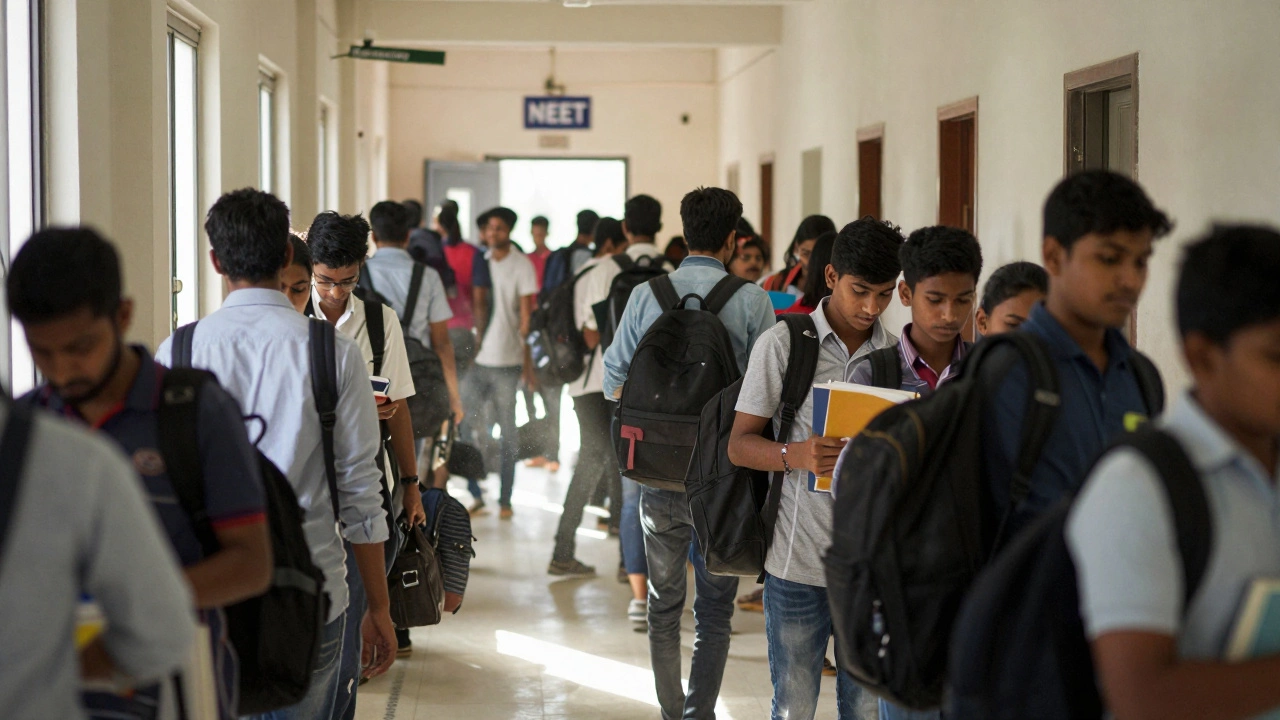
The political tug-of-war has real consequences for students. If you are preparing for medical entrance, the uncertainty creates anxiety. Will the exam pattern change? Will your state introduce new bonus points? Will a court strike down the current year’s results?
For the coaching industry, centered largely in Kota, Rajasthan, and Hyderabad, this opposition is a threat. Their business model relies on the existence of a single, high-stakes national exam. If states successfully carved out independent pathways, the centralized coaching hubs would lose relevance. Consequently, the industry lobbies heavily against state-level alternatives, reinforcing the status quo of NEET.
Students in opposing states face a dilemma. They must prepare for a national exam that may not reflect their local curriculum while navigating a counseling system designed to favor locals. This dual pressure often leads to higher dropout rates among average-scoring candidates who realize they cannot compete with both the national elite and the local quota beneficiaries.
What Does the Future Hold?
As of 2026, the trend suggests a slow consolidation rather than fragmentation. The Supreme Court has shown little appetite for reversing its stance on NEET. However, pressure for reform continues. Possible future developments include:
- Multi-Language Options: To appease states like Tamil Nadu and Kerala, the National Testing Agency (NTA) may expand the availability of NEET in regional languages, reducing the linguistic barrier.
- Syllabus Alignment: A potential compromise could involve aligning the NEET syllabus more closely with CBSE and major state boards to reduce the advantage of specialized coaching.
- Digital Equity: Initiatives to provide free digital resources to rural students could address the equity concerns raised by states like Kerala.
Until then, the opposition will remain rhetorical and legal rather than operational. States will continue to protest, pass symbolic resolutions, and tweak counseling rules, but NEET will remain the gatekeeper.
Strategic Advice for Aspirants
If you are a student in a state that opposes NEET, do not let the politics distract you. Your strategy should be pragmatic:
- Master the NCERT Textbooks: Regardless of state opposition, NEET questions are heavily derived from NCERT. This is your baseline.
- Understand Local Counseling Rules: Study the domicile and reservation rules of your state meticulously. Knowing how seats are allocated is as important as knowing biology.
- Prepare for Multiple Scenarios: Assume NEET will be the only valid exam. Do not bank on a state-level alternative appearing suddenly. It is legally risky and unlikely.
- Language Preparation: If you are not strong in English, start practicing previous years’ papers in English immediately. It is a skill you can improve, unlike innate aptitude.
Can any state completely stop NEET?
No. The Supreme Court of India has declared NEET as the only valid entrance exam for medical admissions. Any state attempt to ban it or replace it with another exam for MBBS/BDS would be struck down as unconstitutional.
Why does Tamil Nadu oppose NEET the most?
Tamil Nadu argues that NEET discriminates against students who study in Tamil-medium schools. They believe the exam favors students from English-medium schools and those who attend expensive coaching centers, creating an unfair disadvantage for local students.
Do states have any control over medical admissions if NEET is mandatory?
Yes. While states cannot change the entrance exam, they control the counseling process. They decide how seats are allocated, manage local quotas, set fee structures for private colleges, and apply reservation policies. This is where they exert influence.
Is NEET available in regional languages?
Yes, NEET is available in multiple languages including English, Hindi, Tamil, Telugu, Kannada, Malayalam, Bengali, Marathi, Gujarati, and others. However, critics argue that the translation quality and the dominance of English terminology in science still pose challenges.
Will the opposition to NEET lead to separate state exams in the future?
It is highly unlikely for MBBS and BDS courses due to strict Supreme Court rulings. However, there may be increased push for separate exams for nursing, pharmacy, and allied health sciences, where the central mandate is less rigid.