
GoDaddy Real Cost Calculator
Don't let the $4.99 headline fool you. Select your setup below to see what you'll actually pay in Year 2.
1. Choose Hosting Plan
Single site, low traffic
Multiple sites, small biz
Blogs, active WP sites
High traffic, custom needs
2. Essential Add-Ons
Uncheck if using free Let's Encrypt (included in most plans)
Only check if NOT using WordPress/HTML
Cost Breakdown
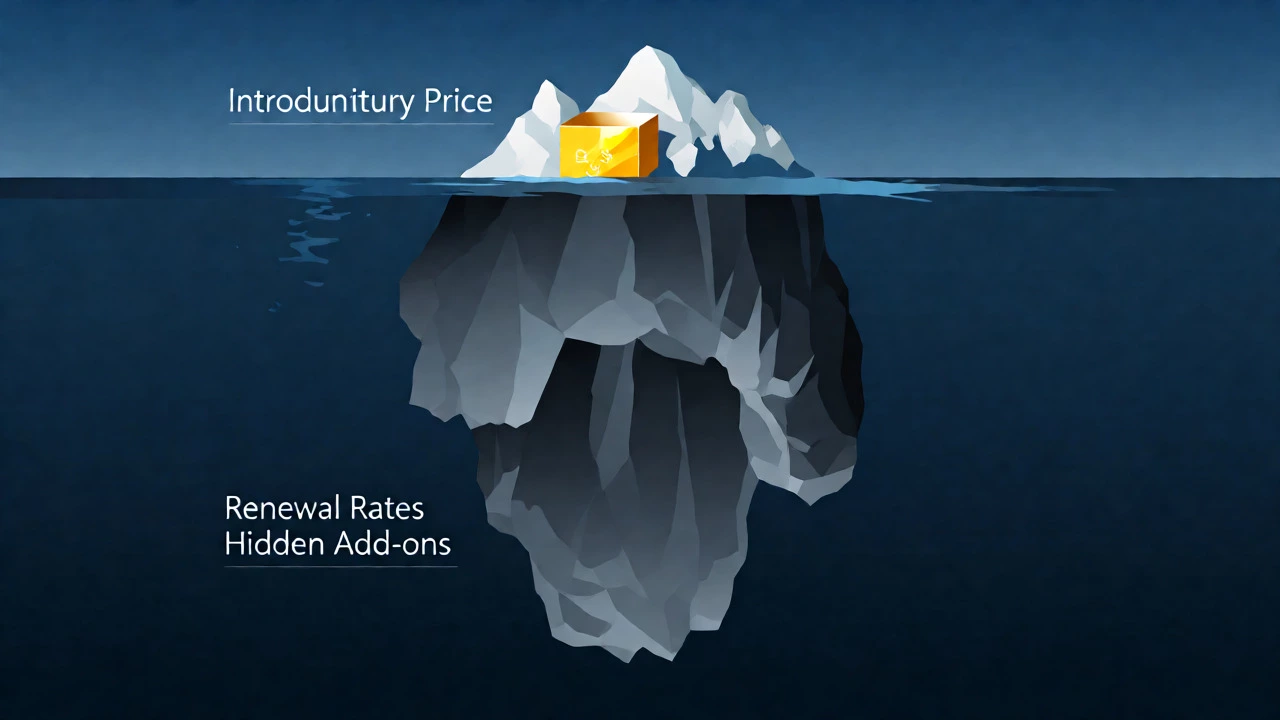
You see an ad for GoDaddy: "Website hosting starting at $4.99/month". You click it, sign up, and then the bill arrives. It’s not $4.99. It’s $15.99. Or maybe $24. Why? Because that shiny introductory price is a trap for the unprepared. If you are trying to figure out how much GoDaddy actually costs, you need to look past the headline number and understand the three hidden layers of their billing structure.
The Truth About Introductory vs. Renewal Rates
Here is the biggest shocker for new users: the price you pay in year one is almost never the price you pay in year two. GoDaddy, like many competitors such as Bluehost or Hostinger, uses aggressive discounting to get you in the door. As of late 2025 and into 2026, the standard shared hosting plan might show up as $3.99 or $4.99 per month on the landing page. But that rate applies only if you prepay for 12 months upfront. Even then, once that first term ends, the renewal rate jumps significantly. For the basic "Economy" shared hosting plan, the renewal price often sits between $8.99 and $11.99 per month. That is more than double what you started with.
Why does this happen? It is a customer acquisition strategy. They know most people won't bother switching hosts after a year because moving a website is annoying. So, they lock you in with cheap entry prices and make money on renewals. When you budget for your website, always calculate the long-term cost using the renewal rate listed in the fine print, not the big bold numbers on the homepage.
Breaking Down the Hosting Plans
Not all hosting is created equal. GoDaddy segments its services into tiers based on performance, storage, and features. Choosing the wrong tier means either overpaying for power you don’t use or underpaying and hitting performance walls within months.
| Plan Type | Intro Price (First Year) | Renewal Price (Year 2+) | Best For |
|---|---|---|---|
| Economy Shared | $3.99 - $4.99 | $8.99 - $11.99 | Single static site, minimal traffic |
| Deluxe Shared | $6.99 - $7.99 | $14.99 - $17.99 | Small business, multiple sites |
| WordPress Managed | $6.99 - $8.99 | $16.99 - $22.99 | Blogs, active WordPress sites |
| VPS Cloud | $19.99+ | $29.99+ | High traffic, custom server needs |
Notice the gap in the middle. The "Deluxe" shared plan is where most small businesses land. It allows for unlimited websites and larger storage. However, if you are running a high-traffic blog or an online store, shared hosting might choke. This is where Managed WordPress comes in. Unlike standard shared hosting, managed plans handle updates, security patches, and caching automatically. The trade-off? It costs roughly 30-50% more than standard shared hosting at renewal time. Is it worth it? If you hate dealing with plugin conflicts and slow load times, yes. If you are tech-savvy and can manage updates yourself, stick to shared hosting.
Domain Names: The Recurring Annual Fee
Hosting isn’t the only monthly-or rather, annual-cost. You also need a domain name. While hosting is billed monthly (or annually), domains are strictly yearly. A standard .com domain usually costs around $12 to $15 per year at renewal. GoDaddy often throws in a free domain for the first year if you buy hosting for 12 months or more. This seems like a great deal until year two rolls around, and you’re paying full price for both hosting and the domain.
Be careful with add-ons here. During checkout, GoDaddy will try to sell you "Domain Privacy" protection. In the past, this was essential to hide your personal address from public WHOIS databases. Today, due to GDPR regulations, most registrars, including GoDaddy, include basic privacy redaction for free. Don’t pay extra for it unless you have specific legal reasons to hide your identity completely.
Hidden Add-Ons That Inflate Your Bill
This is where the "how much is it really" question gets tricky. GoDaddy has a robust marketplace of add-ons that appear optional but are often pushed hard during signup. Here are the ones that impact your monthly budget:
- Email Hosting: Many people assume email comes with hosting. It doesn’t. GoDaddy charges separately for professional email accounts (e.g., [email protected]). A single mailbox can cost $6 to $12 per month depending on the tier. If you have five employees, that’s $30-$60 added to your monthly bill just for email.
- SSL Certificates: Basic SSL is now included with most hosting plans. However, GoDaddy may upsell "Premium SSL" certificates. For 99% of websites, the free Let's Encrypt SSL included in the plan is sufficient. Skip the premium SSL unless you are handling sensitive financial data requiring extended validation.
- Website Builder Subscriptions: If you aren’t using WordPress but are building a site with GoDaddy’s proprietary builder, you pay a separate subscription fee. These range from $9.99 to $29.99 per month. Note that this is distinct from hosting; you cannot easily move a GoDaddy Website Builder site to another host later without rebuilding it.
A common mistake is bundling everything together. Users sign up for hosting + email + SSL + marketing tools thinking they are getting a package deal. Often, buying these separately or choosing a different provider for email (like Google Workspace or Zoho Mail) can save you money. Zoho Mail, for instance, offers a free tier for up to five users with custom domains, which can eliminate that $60 monthly email expense entirely.

Comparison: GoDaddy vs. The Competition
To understand if GoDaddy is expensive, you have to compare it to alternatives. Prices fluctuate, but generally, GoDaddy sits in the mid-range. It is rarely the cheapest option initially, but it isn’t the most expensive either. Its value proposition lies in brand recognition and integrated services.
| Provider | Intro Price | Renewal Price | Key Advantage |
|---|---|---|---|
| GoDaddy | $4.99/mo | $10.99/mo | Integrated ecosystem, easy support |
| Hostinger | $2.99/mo | $7.99/mo | Lower long-term costs |
| Bluehost | $3.95/mo | $11.99/mo | Official WordPress recommendation |
| DreamHost | $2.59/mo | $16.95/mo | Unlimited bandwidth, no caps |
As you can see, Hostinger is cheaper both upfront and at renewal. Bluehost is comparable to GoDaddy but often includes better free features like SSL and email for the first year. If cost is your primary driver, GoDaddy might lose out to Hostinger. If convenience and one-stop-shop management are more important, GoDaddy’s higher renewal rates might be worth the premium.
How to Lower Your Monthly GoDaddy Bill
You don’t have to accept the sticker price. There are ways to keep your costs down without sacrificing service quality.
- Prepay for Longer Terms: Buying a 3-year plan instead of 1-year often locks in a lower rate for longer. While the upfront cash outlay is higher, the average monthly cost drops.
- Audit Your Add-Ons: Log into your account and review every active subscription. Do you really need the "Marketing Suite"? Are you paying for email when you could use a free alternative? Cancel anything you haven’t used in the last 90 days.
- Negotiate Renewals: Yes, you can negotiate. Call GoDaddy support before your renewal date. Tell them you are considering leaving because the price jumped. They often have retention specialists who can offer a discount code for another year.
- Check for Student or Non-Profit Discounts: GoDaddy occasionally offers special rates for verified students and non-profits. It takes five minutes to apply, and it could save you 20-30%.
Remember, the goal isn’t just to find the cheapest host. It’s to find the right balance between cost and reliability. A $2 saving per month isn’t worth it if your site goes down twice a week and support takes three days to reply. GoDaddy’s support is available 24/7 via phone and chat, which adds tangible value if you aren’t technically inclined.
Is GoDaddy hosting actually cheap?
It depends on the timeframe. The initial promotional price is very competitive, often under $5/month. However, the renewal price typically doubles, making it mid-range compared to competitors like Hostinger or Namecheap. It is not the cheapest option for long-term commitments unless you negotiate discounts.
Does GoDaddy charge monthly or annually?
You can choose. Most hosting plans allow monthly, annual, or multi-year billing. However, the lowest advertised prices usually require an annual or multi-year prepayment. Paying monthly results in a higher per-month rate, often 20-30% more than the annual equivalent.
Are there hidden fees with GoDaddy?
Yes, primarily in the form of add-ons. Email hosting, premium SSL certificates, and website builder subscriptions are charged separately. Additionally, domain privacy was historically a paid add-on, though basic privacy is now often included. Always check the cart total before confirming payment.
What is the cost of a .com domain on GoDaddy?
New registrations often start at $11.99 or less for the first year. Renewal prices for .com domains typically range from $14.99 to $17.99 per year as of 2026. Prices vary by TLD (.net, .org, etc.) and current promotions.
Can I cancel my GoDaddy plan anytime?
Yes, but refunds are limited. If you cancel within 30 days of purchase, you are eligible for a full refund. After that, you usually have to wait until the end of your billing cycle. Auto-renewal can be turned off in settings, but existing terms must run their course.
