
IIT Explorer & Comparison Tool (2026)
You’re staring at a mountain of study material for the JEE Advanced exam. The pressure is real. But amidst the calculus drills and physics problems, a fundamental question often pops up: exactly how many IITs are there in India right now? It’s not just a trivia question. Knowing the landscape helps you understand your competition, plan your rank strategy, and visualize where you might end up.
The short answer is: as of 2026, there are 23 Indian Institutes of Technology. This number isn’t static; it has grown significantly over the last decade due to government initiatives aimed at expanding technical education across the country. Understanding this expansion is crucial for any student preparing for the entrance exams, as it affects seat availability, cutoff trends, and regional preferences.
The Evolution of the IIT Network
To get a clear picture, we need to look back briefly. The first IIT was established in Kharagpur way back in 1951. For decades, the network remained small-just seven institutes by the late 1990s. Then came the Big Leap. Between 2008 and 2016, the Government of India upgraded several National Institutes of Technology (NITs) and other institutions to IIT status. This rapid expansion brought the total count from 7 to 23.
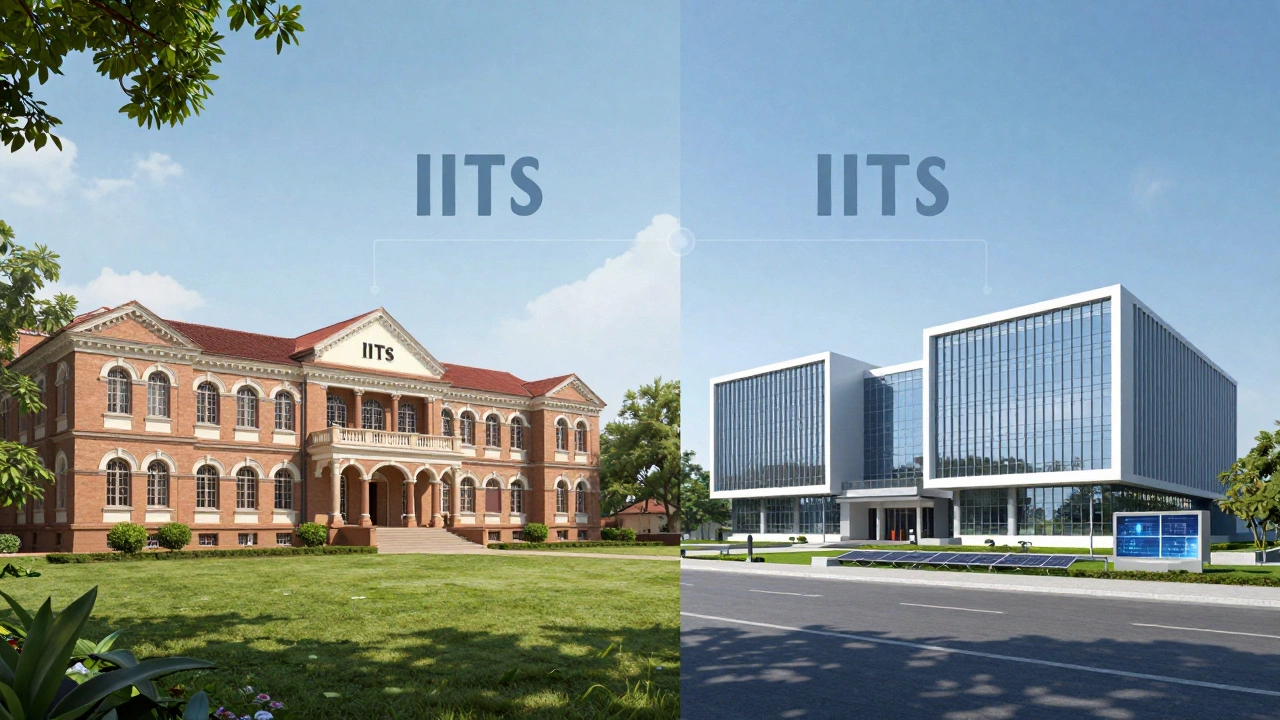
Why does this history matter to you? Because the "old" IITs and the "new" IITs operate with different brand equity, infrastructure maturity, and placement records. While all are prestigious, the legacy institutes still hold a slight edge in global recognition and alumni networks. Knowing which category an institute falls into helps you prioritize your choices during counseling.
The Full List of 23 IITs in India
Here is the complete breakdown of the 23 institutes, categorized by their establishment era. This distinction is vital because admission cutoffs vary wildly between these groups.
| Institute Name | Location | Establishment Year | Category |
|---|---|---|---|
| IIT Bombay | Mumbai, Maharashtra | 1958 | Legacy |
| IIT Delhi | New Delhi | 1963 | Legacy |
| IIT Madras | Chennai, Tamil Nadu | 1959 | Legacy |
| IIT Kanpur | Kanpur, Uttar Pradesh | 1959 | Legacy |
| IIT Kharagpur | Kharagpur, West Bengal | 1951 | Legacy |
| IIT Guwahati | Guwahati, Assam | 1994 | Legacy | d>
| IIT Roorkee | Roorkee, Uttarakhand | 2001 | Legacy |
| IIT Bhubaneswar | Bhubaneswar, Odisha | 2008 | Newer |
| IIT Gandhinagar | Gandhinagar, Gujarat | 2008 | Newer |
| IIT Hyderabad | Sangareddy, Telangana | 2008 | Newer |
| IIT Indore | Indore, Madhya Pradesh | 2009 | Newer |
| IIT Patna | Patna, Bihar | 2008 | Newer |
| IIT Ropar | Rupnagar, Punjab | 2008 | Newer |
| IIT Jodhpur | Jodhpur, Rajasthan | 2008 | Newer |
| IIT Mandi | Mandi, Himachal Pradesh | 2009 | Newer |
| IIT Bhilai | Durg, Chhattisgarh | 2016 | Newest |
| IIT Dhanbad | Dhanbad, Jharkhand | 2016 | Newest |
| IIT Goa | Goa | 2016 | Newest |
| IIT Palakkad | Palakkad, Kerala | 2015 | Newest |
| IIT Tirupati | Tirupati, Andhra Pradesh | 2015 | Newest |
| IIT Pune | Pune, Maharashtra | 2016 | Newest |
| IIT Jammu | Jammu, J&K | 2016 | Newest |
| IIT Dharwad | Dharwad, Karnataka | 2016 | Newest |
Why the Number Matters for Your Strategy
You might wonder why you need to memorize this list. It’s about probability and preference. With 23 institutes, the distribution of seats is wider than ever before. However, the demand is also higher. The number of applicants for JEE Main and Advanced has surged, meaning that securing a seat in a Legacy IIT requires a near-perfect score.
For students aiming for branches like Computer Science or Electrical Engineering, the competition is fiercest at the top tier. But here’s the good news: the newer IITs offer excellent infrastructure and growing placement records. If you have a strong rank but not a top-100 one, targeting a newer IIT can give you the IIT tag with a better branch choice. This trade-off is a key part of your decision-making process.
Admission Process: The Two-Stage Filter
Getting into any of these 23 institutes involves clearing two major hurdles. First, you must qualify for JEE Main. Only the top 2.5 lakh candidates from JEE Main are eligible to sit for JEE Advanced. Second, you need to crack JEE Advanced itself. The final ranking for admission is based solely on your JEE Advanced score.
It’s important to note that while there are 23 IITs, they do not all offer every course. Some newer institutes focus heavily on core engineering disciplines initially, adding specialized programs like AI, Data Science, or Biotechnology as they mature. Always check the specific brochure for each institute during the counseling phase.
Common Misconceptions About IIT Count
A frequent point of confusion is the difference between IITs and NITs. People often mix them up because both are central government-funded technical institutes. As of 2026, there are over 30 NITs in India. They are distinct entities with separate entrance processes (though JEE Main scores are used for both). Another misconception is that all IITs have the same cutoff. In reality, the closing rank for General Category students in CSE at IIT Bombay can be under 100, while at a newer IIT, it might extend to several thousand. Understanding this spread helps you set realistic targets.
Future Expansion Plans
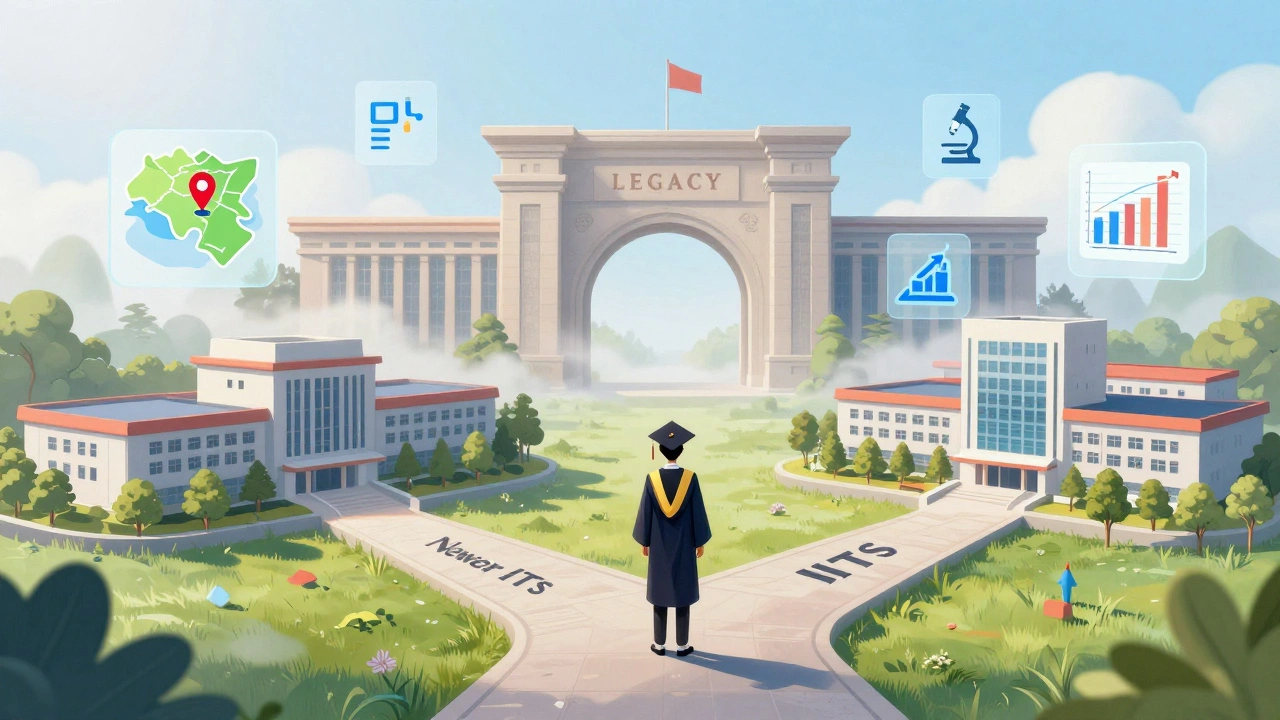
Is the number going to stay at 23? Probably not. The Ministry of Education has been evaluating proposals for new IITs in states that currently lack one. The goal is to ensure equitable access to quality technical education across all regions. However, any new additions undergo rigorous scrutiny to maintain the high standards associated with the IIT brand. For now, keep your focus on the existing 23.
How to Choose the Right IIT
Once you have your rank, the next step is counseling. Don’t just pick the highest-ranked institute available. Consider location, climate, campus culture, and industry connections. For example, if you want to pursue startups, IIT Bombay and IIT Madras have vibrant ecosystems. If you prefer a quieter environment focused on research, institutes like IIT Mandi or IIT Guwahati might appeal to you. Your choice should align with your career goals, not just the prestige label.
Are all 23 IITs considered equal?
No. While all are prestigious, the legacy IITs (Bombay, Delhi, Madras, Kanpur, Kharagpur, Guwahati, Roorkee) generally have higher brand value, older alumni networks, and slightly better placement statistics. However, newer IITs are catching up rapidly in terms of infrastructure and faculty quality.
Can I get into an IIT with a low JEE Main rank?
Not directly. You must first qualify for JEE Advanced through JEE Main. Once qualified, your JEE Advanced rank determines your admission. A lower JEE Advanced rank might still get you into a newer IIT or a less popular branch in a legacy IIT.
Will more IITs be added in 2026?
As of mid-2026, no new IITs have been officially inaugurated beyond the 23rd. Proposals exist, but the approval process is slow and rigorous to ensure quality standards are met.
What is the difference between IITs and NITs?
IITs are Institutes of Technology, focusing on research and innovation, with a highly competitive entry via JEE Advanced. NITs are National Institutes of Technology, also government-funded but generally considered a tier below IITs in terms of selectivity and brand perception. Both use JEE Main scores for initial screening, but only IITs require JEE Advanced.
Which IIT is best for Computer Science?
IIT Bombay, IIT Delhi, and IIT Madras are traditionally considered the top three for Computer Science due to their strong industry ties, coding culture, and high placement packages. However, IIT Kanpur and IIT Kharagpur are also extremely strong contenders.