Career Path Finder: Vocation vs. Trade
Answer these three questions based on your honest preferences. There are no wrong answers—only different paths.
The Active Site
Construction sites, client homes, outdoors, factories.The Controlled Space
Offices, studios, clinics, classrooms, shops.Concrete & Physical
Fixing things that are broken, building structures, clear rules.Abstract & Creative
Designing solutions, helping people, open-ended challenges.Hands-On Apprenticeship
Learn by doing alongside an expert. Earn while you learn.Structured Education
Classes, theory, certifications, and bootcamps.Analyzing...
Recommended Paths:
You finish school, look at your options, and see two paths: a "vocational course" or learning a "trade." They sound like twins. Both involve doing something with your hands. Both promise a job without necessarily requiring a four-year university degree. But are they actually the same thing? If you pick the wrong label for your goal, you might end up in a classroom when you wanted a workshop, or on a construction site when you wanted to run a salon.
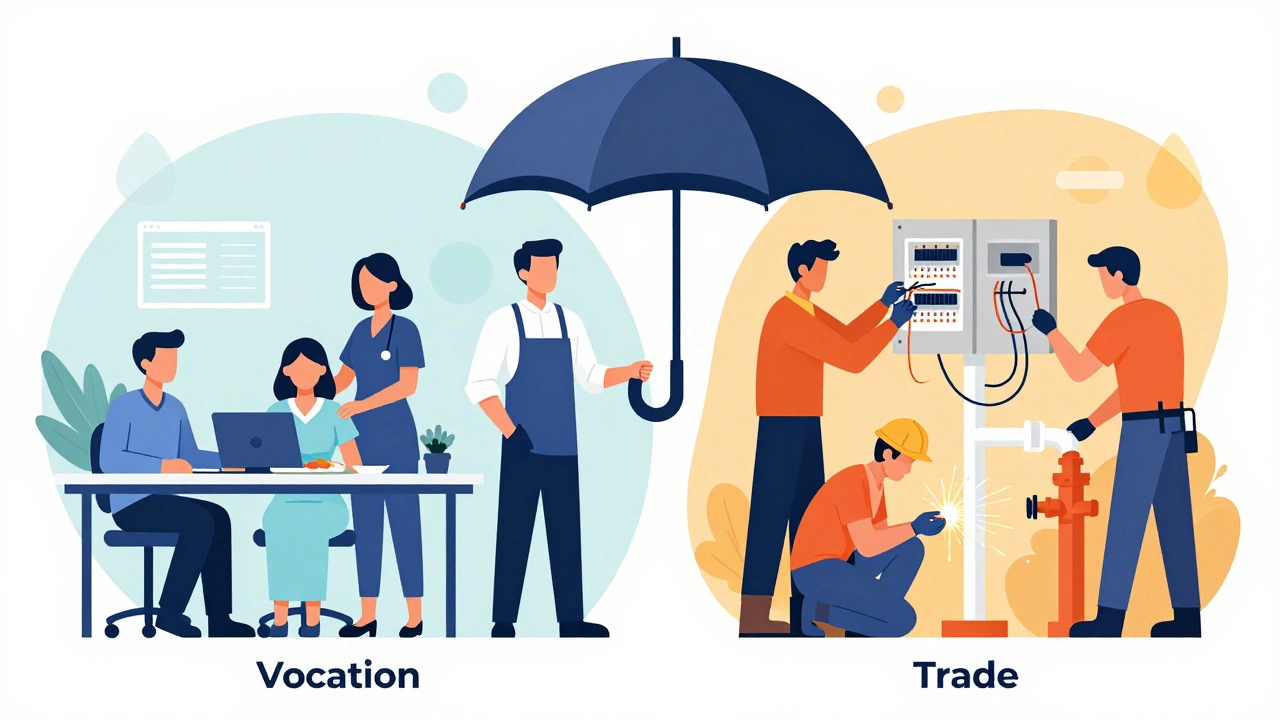
Here is the short answer: No, they are not the same. While there is a massive overlap, **vocation** is a broader term that covers any work calling, including creative and service roles, whereas a **trade** is a specific subset of skilled manual labor. Think of vocation as the umbrella and trade as one of the sturdy poles holding it up. Knowing the difference helps you choose the right training program, avoid student debt for degrees you don't need, and land a job that actually fits your personality.
The Big Picture: What Is a Vocation?
Let’s start with the wider concept. A vocation is a person's occupation or profession, often implying a strong feeling of suitability for a particular career. The word comes from the Latin *vocare*, meaning "to call." Historically, people believed their work was a divine calling. Today, we use it more loosely to mean any job that requires specific training but isn't necessarily an academic pursuit.
Vocational education (often called "Voc-Ed") prepares you for these jobs. It focuses on practical skills rather than theoretical knowledge. When you take a vocational course, you are learning how to do something specific that the market needs right now. This could be coding, accounting, nursing assistance, graphic design, or even hospitality management.
The key attribute of a vocation is versatility. It includes:
- Service-based roles: Like being a hair stylist, a chef, or a childcare worker.
- Creative fields: Such as photography, video editing, or interior design.
- Technical office jobs: Like medical billing, paralegal work, or IT support.
- Skilled trades: Which brings us to the next point.
If you say you have a "vocation," you are describing your entire professional identity. It’s personal. It’s what you feel drawn to do every day. A vocation can be learned through community college, specialized bootcamps, apprenticeships, or even online certifications.
The Hands-On Reality: What Is a Trade?
Now, let’s narrow it down. A trade is a skilled craft or line of work that involves manual labor and technical expertise. Tradespeople build, fix, install, and maintain the physical world around us. You cannot do a trade purely from a desk. You need tools, materials, and usually, a physical location where the work happens.
Common examples of trades include:
- Electrical work: Wiring homes and buildings safely.
- Plumbing: Installing and repairing water systems.
- Carpentry: Building structures and furniture from wood.
- HVAC: Heating, ventilation, and air conditioning systems.
- Welding: Joining metal parts together.
- Masonry: Working with bricks, stones, and concrete.
Trades are defined by their reliance on manual dexterity and physical problem-solving. If a pipe bursts at 3 AM, you don’t call a philosopher; you call a plumber. That urgency and physical nature define the trade experience. In many countries, including India and the US, trades are heavily regulated. You often need a license or certification to legally perform the work because mistakes can cause fires, floods, or structural collapses.
Key Differences: Vocation vs. Trade
To really see the gap between these two concepts, we need to look at how they differ in practice. Here is a breakdown of the main distinctions.
| Feature | Vocation (Broad) | Trade (Specific) |
|---|---|---|
| Scope | Includes creative, service, technical, and manual jobs. | Limited to skilled manual labor and technical crafts. |
| Primary Skill Set | Mixed: mental, creative, communicative, and manual. | Dominantly manual dexterity, physical strength, and spatial awareness. |
| Training Path | Community colleges, online courses, diplomas, certificates. | Apprenticeships, on-the-job training, trade schools. |
| Work Environment | Offices, studios, hospitals, classrooms, shops. | Construction sites, factories, client homes, industrial plants. |
| Licensing | Varies widely; some require none, others need strict certs. | Almost always requires state/local licensing due to safety risks. |
| Income Potential | Wide range; depends heavily on industry and creativity. | Often high starting wages; increases with experience and union membership. |
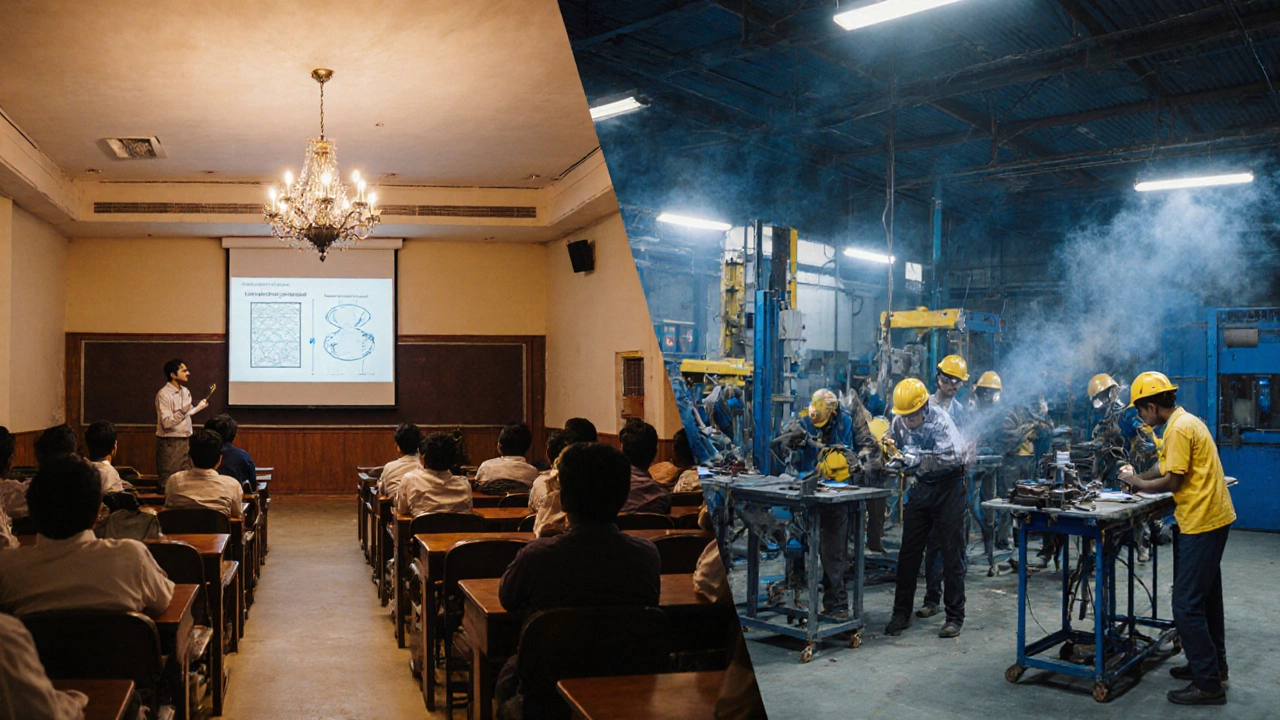
Notice the training path difference. Vocational students often spend significant time in classrooms learning theory before practicing. For example, a vocational nursing student learns anatomy and pharmacology extensively. A trade apprentice, however, might spend only 15% of their time in class and 85% working alongside a master electrician. The "school" for a trade is the job site itself.
Why the Confusion Exists
So why do people mix them up? Because in many educational systems, they are housed under the same roof. In India, for instance, the National Skill Development Corporation (NSDC) promotes "skilling" which covers both vocational courses (like retail management) and trades (like welding). Similarly, in the United States, "Career and Technical Education" (CTE) programs offer both computer science (vocational) and automotive repair (trade).
This administrative grouping creates a semantic blur. When a counselor tells you to "explore vocational options," they might be pointing you toward a culinary arts diploma (vocation) or an HVAC certification (trade). The intent is similar-get you job-ready quickly-but the daily reality of those jobs is vastly different.
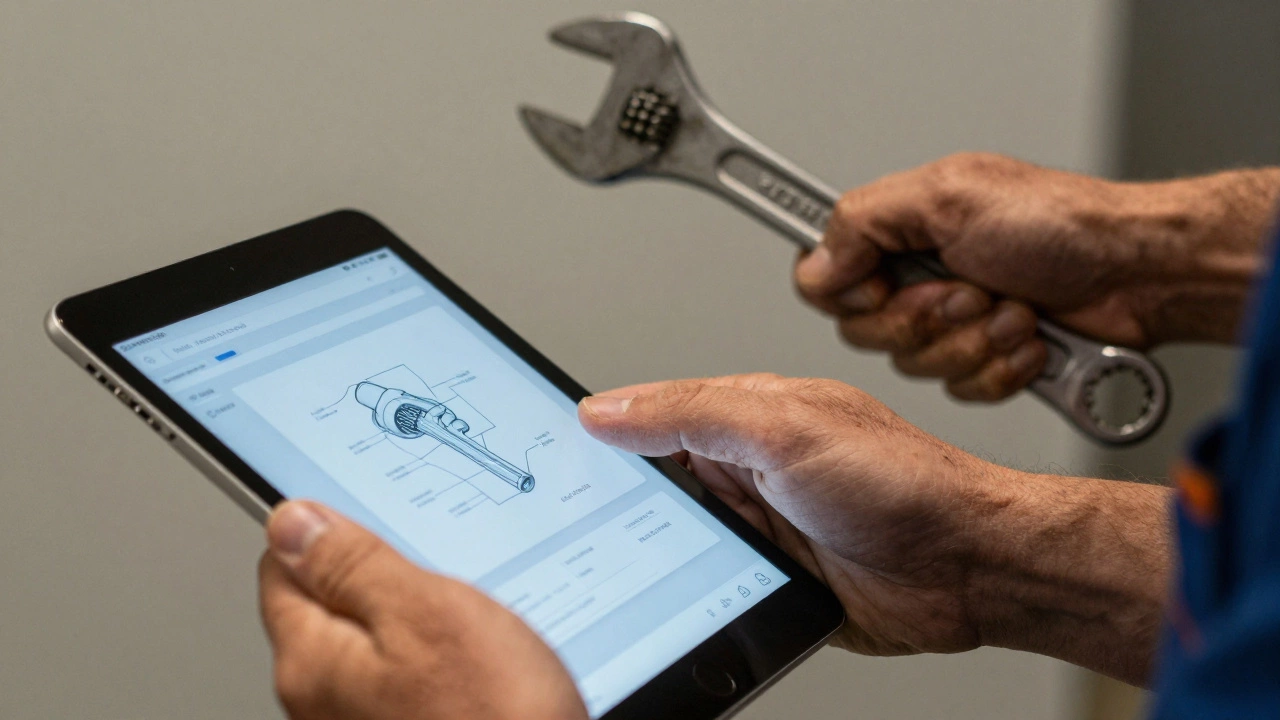
Another reason for the confusion is the shift in technology. Modern trades are no longer just about brute force. An electrician today needs to understand complex circuit diagrams and smart home integration software. A welder needs to operate robotic arms. As trades become more technical, they start looking more like traditional vocational roles. Conversely, some vocational roles, like web development, have become so standardized that they feel like trades. You learn a set of tools, you apply them, you get paid.
Choosing Your Path: Which One Fits You?
Understanding the difference isn't just academic; it affects your wallet and your happiness. Here is how to decide which path aligns with your goals.
Consider a Trade if:
- You dislike sitting at a desk all day.
- You enjoy seeing tangible results of your work (e.g., "I built this wall").
- You want to start earning money quickly, often while you are still learning.
- You are comfortable with physical activity and potentially hazardous environments.
- You prefer clear rules and standards (codes and regulations) over open-ended creative problems.
Consider a Broader Vocation if:
- You enjoy creative expression or helping people directly.
- You prefer a controlled environment like an office, studio, or clinic.
- You want flexibility in your career trajectory (e.g., moving from designer to art director).
- You are interested in industries like healthcare support, hospitality, or digital media.
- You value a balance between mental and light physical tasks.
For example, if you love working with your hands but hate the idea of climbing ladders or crawling into crawl spaces, plumbing (trade) might burn you out. However, carpentry focused on furniture making (which can be classified as a trade or a vocational craft depending on the setting) might fit perfectly. Or, if you enjoy logic but prefer a quiet room, a vocational course in data analytics might be better than a trade in heavy machinery operation.

The Future of Work: Are These Distinctions Fading?
We are living in 2026, and the job market is shifting rapidly. Automation is changing both vocations and trades. Robots are taking over repetitive assembly line tasks, which were once considered low-skill trades. At the same time, AI is assisting in diagnostic roles, impacting vocational fields like radiology tech support.
However, the demand for human touch remains high. People trust humans to fix their homes (trades) and to care for their health or appearance (vocational services). In fact, the shortage of skilled tradespeople is a global crisis. In many developed nations, there are more openings for electricians and plumbers than for university graduates in certain humanities fields. This scarcity drives up wages for trades significantly.
Vocational roles, particularly in tech and healthcare, also remain robust. The key is adaptability. Whether you choose a trade or a broader vocation, continuous learning is non-negotiable. A plumber today needs to know about green energy water heaters. A vocational marketing specialist needs to understand algorithmic advertising. The label matters less than the willingness to update your skills.
Conclusion: Pick the Label That Fits Your Life
Is vocation the same as trade? Technically, no. Practically, they are cousins in the family of skilled work. Both reject the notion that a four-year liberal arts degree is the only path to success. Both value competence over credentials.
Your choice shouldn't be based on semantics. It should be based on your daily preferences. Do you want to be outdoors or indoors? Do you want to create art or fix infrastructure? Do you want to solve abstract problems or concrete ones? Answer those questions, and the label will sort itself out. Whether you end up welding steel or designing websites, you are pursuing a vocation. And if that vocation involves heavy tools and blueprints, you are also in a trade. Own whichever title you earn.
Is a trade considered a vocational job?
Yes, absolutely. All trades are vocational jobs because they require specific training and skills. However, not all vocational jobs are trades. For example, a dental hygienist has a vocational role, but it is not typically classified as a trade because it lacks the heavy manual labor and construction/installation aspects associated with traditional trades like plumbing or electrical work.
Which pays more: a trade or a vocational degree?
It depends heavily on the specific role and location. Generally, skilled trades like electrical work, welding, and HVAC tend to have higher starting salaries compared to many entry-level vocational roles in administration or retail management. This is due to the high demand and physical difficulty of trade work. However, advanced vocational roles in healthcare (like sonography) or IT can surpass trade incomes over time, especially with specialization.
Do I need a degree to enter a trade?
No, you typically do not need a traditional university degree. Most trades are entered through apprenticeships, where you earn while you learn. Some may require a certificate from a trade school or community college, but these programs usually last six months to two years, significantly shorter than a bachelor's degree.
What are the best vocational courses for beginners in 2026?
In 2026, high-demand vocational courses include digital marketing, basic coding (HTML/CSS/JavaScript), healthcare assisting, culinary arts, and renewable energy installation (solar panel fitting). These fields offer quick entry points and strong job growth prospects globally.
Can I switch from a vocational job to a trade later?
Yes, career switching is common. Many people start in general vocational roles and discover a passion for hands-on work later. For example, someone working in facility maintenance (vocational) might decide to get certified as an electrician (trade). The transferable skills, such as understanding building systems, make the transition smoother.