Freelance Web Developer Pricing Calculator
You’ve spent months learning HTML, CSS, and JavaScript. You can build a responsive landing page in your sleep. But when you look at the job market, it feels like everyone is already hired, or they’re charging pennies on Upwork. So, is it actually hard to get work as a freelance web developer? The short answer is yes, if you just wait for opportunities to fall into your lap. The longer answer is no, if you treat freelancing like a business rather than a hobby.
In 2026, the barrier to entry has never been lower because AI tools can generate code instantly. However, the barrier to *trust* has never been higher. Clients don’t just need someone who can write code; they need someone who can solve problems without hand-holding. This shift changes how you find work, price your services, and keep clients coming back.
The Reality of the 2026 Market
The landscape for web developers has shifted dramatically. Five years ago, knowing basic WordPress customization was enough to land steady gigs. Today, with AI-powered website builders like Wix ADI or Framer AI handling simple sites, clients expect more. They want custom functionality, speed optimization, and seamless integrations that generic templates can’t provide.
This means the "hard" part isn’t finding work-it’s finding *good* work. Low-end competition is fierce because anyone with an internet connection can claim to be a developer. High-end demand remains strong because businesses still struggle to find reliable partners who understand both technology and user experience. Your goal isn’t to compete on price; it’s to compete on reliability and specialized skill.
Why is it harder to find freelance work now compared to 2021?
AI tools have automated basic coding tasks, increasing the supply of junior-level output. Clients now expect faster delivery and lower costs for simple projects, pushing developers to specialize in complex, custom solutions to remain competitive.
Building a Portfolio That Actually Gets Hired
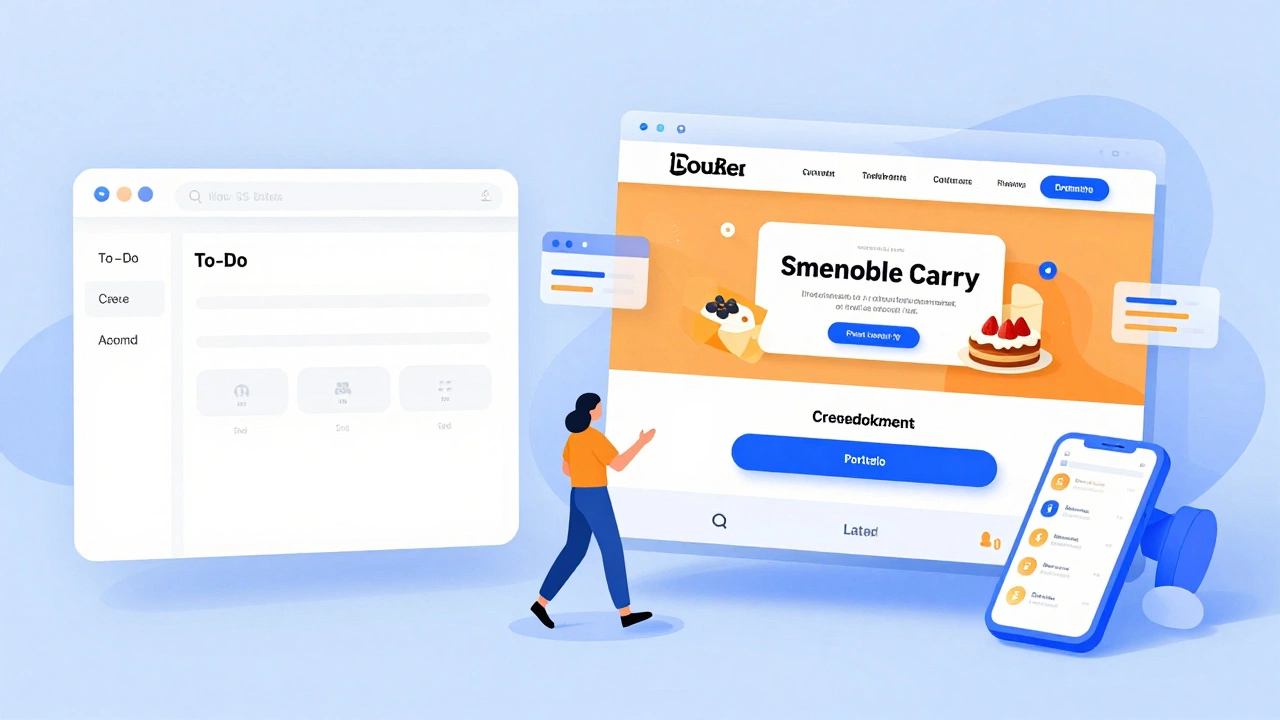
Your portfolio is your biggest asset. If you’re showing off To-Do apps and weather widgets, you’re telling clients you’re a student, not a professional. Clients care about results, not code syntax. They want to see websites that load fast, look great on mobile, and convert visitors into customers.
Start by rebuilding three real-world projects. Pick a local bakery, a fictional SaaS startup, and a personal blog. For each, document the problem you solved. Did you improve load times by 40%? Did you integrate a payment gateway? Use specific metrics. When a client asks, “Can you handle my e-commerce site?” you shouldn’t just say yes-you should show them the Shopify store you optimized last month.
- Showcase diversity: Include at least one static site, one dynamic application (using React or Vue), and one CMS-based project (WordPress or Strapi).
- Highlight process: Briefly explain your workflow. Do you use Git? Do you test on multiple devices? This signals professionalism.
- Keep it live: Broken links kill credibility. Ensure every project in your portfolio is hosted and accessible.
A common mistake is hiding behind a fancy design. Keep your portfolio clean and fast. If your own site takes five seconds to load, why would a client trust you with theirs?
Where to Find Clients Beyond Upwork
Freelance platforms like Upwork and Fiverr are crowded. You’ll spend hours bidding on jobs only to lose to someone charging half your rate. While these platforms can be good for beginners building reviews, they aren’t sustainable for long-term growth. Instead, focus on channels where clients actively seek expertise.
LinkedIn is a professional networking platform that connects freelancers directly with decision-makers. Optimize your profile headline to say exactly what you do: “Freelance Web Developer specializing in high-converting landing pages for startups.” Post weekly updates about a technical challenge you solved. Tag relevant companies. Engage with posts from marketing managers and small business owners. Direct outreach works better than waiting for inbound leads.
Another underutilized channel is local networking. Join chambers of commerce or industry-specific meetups in Bangalore or your city. Small businesses often prefer working with someone they can meet face-to-face. Offer to fix their broken contact form or slow-loading homepage as a foot-in-the-door strategy. Once they see value, they’ll hire you for bigger projects.
| Channel | Effort Level | Client Quality | Time to First Pay |
|---|---|---|---|
| Upwork/Fiverr | High | Mixed | Fast (1-2 weeks) |
| LinkedIn Outreach | Medium | High | Slow (1-3 months) |
| Local Networking | Low | Very High | Variable |
| Cold Emailing | High | Medium | Slow (2-4 weeks) |
Pricing Yourself Without Undervaluing
New freelancers often charge hourly rates out of fear. This punishes efficiency. If you become faster, you earn less. Instead, switch to project-based pricing. Estimate how many hours a task will take, then multiply by your desired hourly rate, but add a buffer for revisions and unexpected issues.
For example, if a simple brochure website usually takes 20 hours and you want to earn $50/hour, quote $1,200-$1,500, not $1,000. Clients associate higher prices with higher quality. If you’re unsure, research what agencies charge for similar work and position yourself slightly below them as a cost-effective alternative.
Always require a 50% deposit before starting work. This filters out tire-kickers and ensures commitment. Never begin coding until the money is in your account. Use contracts to define scope clearly-what’s included, what’s extra, and how many revision rounds are allowed. Scope creep is the silent killer of freelance profitability.
Technical Skills That Command Premium Rates
Knowing HTML and CSS is table stakes. To stand out in 2026, you need skills that solve expensive business problems. Here are three areas that consistently pay well:
- Performance Optimization: Sites that load in under 2 seconds convert better. Learn Core Web Vitals, image compression techniques, and server-side rendering. Clients will pay extra to boost their Google rankings.
- Headless CMS Integration: Many brands want flexibility. Learn to connect front-end frameworks like Next.js with headless CMS platforms like Contentful or Sanity. This decouples content management from design, offering clients greater control.
- Accessibility Compliance: With stricter global regulations, ensuring your sites meet WCAG 2.1 standards is crucial. Offering accessibility audits and fixes as a service adds significant value.
You don’t need to master all of these overnight. Pick one niche and deepen your expertise. Become the go-to person for “fast, accessible websites” rather than a generalist who does everything mediocrely.

Managing the Business Side
Freelancing is 50% coding and 50% administration. If you ignore the business side, you’ll burn out. Set aside time each week for invoicing, tax planning, and client communication. Use tools like Wave or FreshBooks to automate invoices. Track every hour you work, even if you’re on fixed-price projects, to refine your future estimates.
Communication is your most underrated skill. Send weekly progress updates. Ask questions early. Be transparent about delays. Clients forgive mistakes; they don’t forgive silence. Building trust turns one-off projects into retainer agreements, which provide financial stability.
How much should I charge as a beginner freelance developer?
Start with $25-$40 per hour or $500-$800 for simple projects. As you build a portfolio and testimonials, raise rates by 20% after every two successful clients. Focus on value delivered, not hours worked.
Do I need a degree to freelance?
No. Clients care about results, not diplomas. A strong portfolio and positive testimonials outweigh formal education in the freelance market.
What is the biggest mistake new freelancers make?
Working without a contract or deposit. This leads to unpaid work and scope creep. Always define terms upfront and get paid before starting.
Is AI replacing freelance web developers?
AI automates repetitive coding tasks but cannot replace strategic thinking, client communication, or complex problem-solving. Developers who leverage AI tools to work faster gain a competitive edge.
How long does it take to land the first client?
Typically 1-3 months if you actively network and apply to jobs daily. Passive approaches can take much longer. Consistency in outreach is key.
Next Steps to Launch Your Career
If you’re ready to start, here’s your action plan for the next 30 days:
- Week 1: Build or polish three portfolio projects. Host them on Netlify or Vercel.
- Week 2: Create a LinkedIn profile focused on your niche. Connect with 10 potential clients daily.
- Week 3: Draft a standard contract and invoice template. Set up a separate bank account for business income.
- Week 4: Reach out to five local businesses or past colleagues with a personalized offer. Apply to three curated freelance jobs on specialized boards like We Work Remotely or Arc.dev.
Getting work as a freelance web developer isn’t hard if you approach it strategically. It requires patience, persistence, and a willingness to learn both technical and soft skills. The market rewards those who deliver value reliably. Start small, stay consistent, and watch your client base grow.